
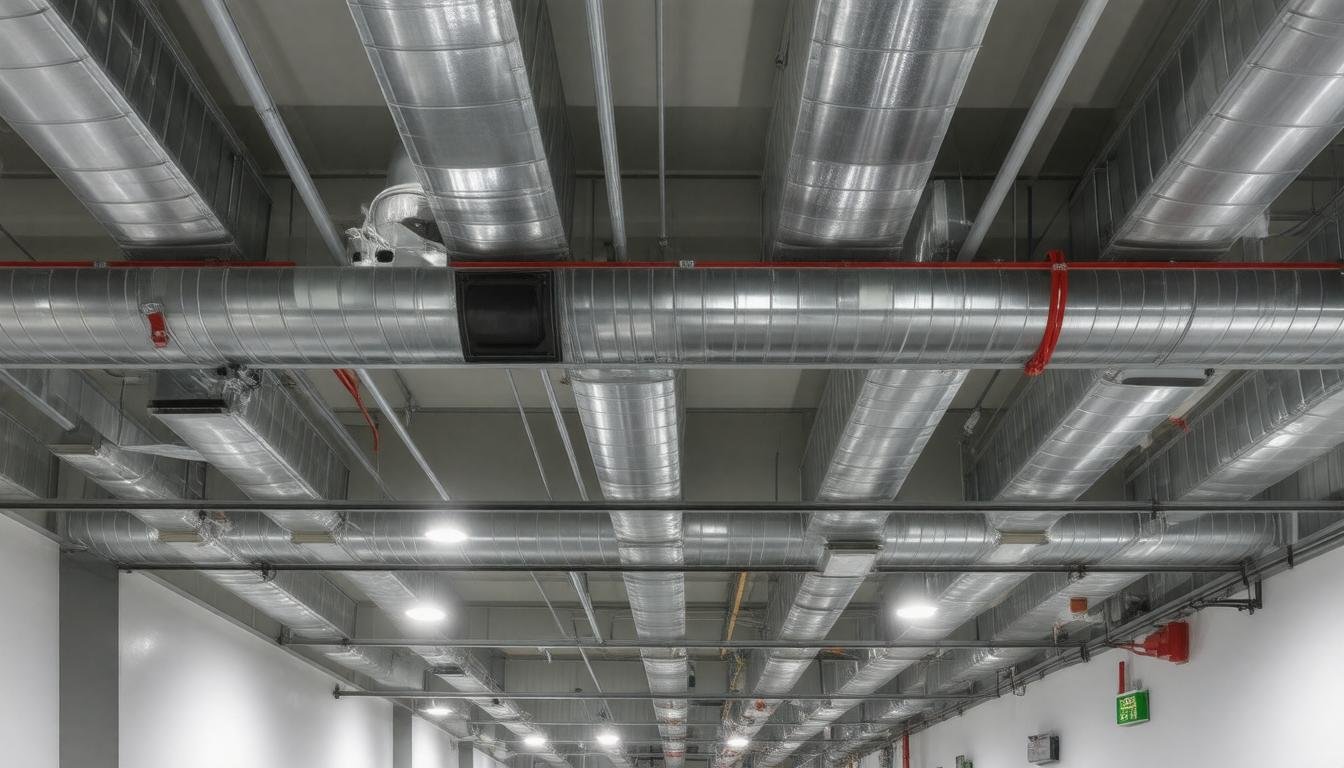
Smoke Ventilation System Design Guide: Best Practices for Building Code Compliance
Smoke ventilation systems might not be the first thing you think about when walking into a building, but they play

When it comes to fire safety, most people think about alarms and sprinklers—but one crucial system often gets overlooked: the stairwell automatic opening ventilator, or AOV. This clever setup is designed to keep stairwells clear of smoke during a fire, making escape routes safer and giving firefighters a better chance to control the blaze. Having worked closely with these systems, I’ve seen firsthand how they quietly protect lives by managing smoke where it matters most. Let’s dive into how Stairwell AOVs work and why they’re an essential part of building safety.
A stairwell AOV (Automatic Opening Ventilator) is a critical smoke ventilation system designed to keep stairwells clear of smoke during fires, ensuring safe evacuation routes and access for firefighters. By automatically opening to extract smoke and provide fresh air, these vents comply with building regulations and significantly enhance occupant safety in flats, offices, and other multi-storey buildings.
At its core, a Stairwell Automatic Opening Ventilation (AOV) system is designed to keep stairwells free of smoke, creating a safe escape route for building occupants when a fire breaks out. Imagine being inside a multi-story building: stairwells are the critical lifelines for evacuation, but without proper ventilation, they can quickly fill with smoke, turning them into dangerous zones.
An AOV system combats this by automatically opening vents—usually located near the top of the stairwell—to let smoke escape freely while allowing fresh air to flow in. This natural ventilation keeps the air breathable and visibility clear, which is essential for both residents fleeing the building and firefighters entering to fight the blaze.
These systems don’t operate in isolation; they’re integrated into the building’s comprehensive fire safety infrastructure. Smoke detectors strategically placed throughout the stairwell sense rising smoke or heat, sending a signal to the control panel. The control panel then triggers the opening of ventilation grilles or windows, usually within seconds.
This seamless coordination ensures that ventilation begins immediately, minimising smoke accumulation before it can pose severe risks. Because timing is so crucial, these systems come equipped with reliable power supplies—including backups—to ensure activation even during power failures, which are common during emergencies.
It’s worth noting that compliance with stringent standards such as BS EN 12101-9 governs how these ventilators must perform. For example, opening vents need to provide at least 1.5 square metres of clear area per stairwell section to allow sufficient airflow. This specification isn’t arbitrary—it’s based on careful calculations regarding how much volume smoke occupies and how quickly it needs to be removed to maintain safe conditions.
The aim is to maintain a breathable atmosphere that supports safe evacuation times and effective firefighting operations.
The main components that make all this possible include:
With these parts working together, stairwell AOV systems form an indispensable shield against one of fire’s deadliest threats—smoke inhalation—setting the stage for exploring their vital role in enhancing fire safety across buildings.
Smoke inhalation causes far more fatalities during fires than burns do. This stark reality underscores the critical role of Stairwell Automatic Opening Ventilators (AOVs) in protecting lives. When a fire breaks out, it’s often not the flames themselves but the thick, toxic smoke that blocks escape routes and incapacitates occupants. AOVs work by actively removing smoke from stairwells, ensuring these vital escape paths remain clear and breathable during fire emergencies.
The key advantage of an AOV system lies in its ability to maintain smoke-free escape routes. This isn’t just about comfort; it’s about survival. Evacuating a building through a smoke-filled stairwell is dangerous and disorienting—visibility drops, breathing becomes difficult, and panic increases. By extracting smoke, AOVs make it possible for occupants to evacuate calmly and safely.
Moreover, these ventilators also enhance visibility and air quality for firefighters entering the building, allowing faster navigation to locate and suppress the fire source effectively. This dual benefit optimises both evacuation and firefighting efforts.
The gravity of this cannot be overstated: research from the National Fire Protection Association reveals that approximately 65% of fire-related deaths are caused by smoke inhalation, not burns. Installing Stairwell AOVs has been shown to significantly mitigate this risk by reducing the concentration of toxic gases inside stairwells by almost 50%, according to recent studies.
In fact, buildings equipped with properly functioning AOV systems experience around 25% fewer casualties linked to smoke exposure during fires.
These benefits illustrate why AOVs have become an indispensable component of modern fire safety design:
It’s worth noting how these systems integrate seamlessly with broader fire safety mechanisms. Often activated automatically via the building’s alarm system, AOVs open vents that provide a calculated ‘free area’ for smoke to escape without compromising structural integrity or allowing backflow of smoke into other areas.
Their design complies with rigorous testing per BS EN 12101-2-2003 standards and the Construction Products Regulations (CPR), ensuring reliable performance when it counts most.
From my experience working with clients at Mercor UK, one constant concern is making sure that stairwells maintain sufficient “tenable conditions”—environments where people can still see clearly and breathe safely enough to exit on their own without assistance. Stairwell AOVs are frontline tools in meeting this challenge.
“Keeping stairwells free from smoke isn’t just good practice—it saves lives.”
For building owners or managers looking to enhance safety, regular inspection and maintenance of these ventilators are just as essential as their installation. Clogged or malfunctioning AOV units can fail precisely when needed, negating their life-saving potential.
Partnering with specialists knowledgeable in current fire safety regulations ensures these systems function at peak efficiency continuously.
Understanding why these systems are so crucial sets the stage for exploring how exactly they operate within buildings during fire emergencies, revealing the mechanics behind their life-saving roles.
At the core, a stairwell Automatic Opening Ventilator (AOV) is engineered to spring into action the moment smoke is detected. Picture a network of smoke sensors quietly standing guard, ready to alert the system as soon as something unusual appears in the air. The instant these sensors detect smoke, they send an immediate signal to the control panel—a central ‘brain’ that orchestrates the response without any human delay. This rapid detection and signalling ensure the evacuation process starts promptly, preventing smoke from taking over escape routes.
Once triggered, the control panel activates the ventilation grilles positioned usually at the top of stairwells. These vents are no ordinary windows; they’re designed to open swiftly and create an unobstructed path for harmful smoke to exit. This automatic opening is crucial because manual intervention might be too slow when seconds count, especially in buildings filled with residents or office workers who need quick, safe exits. By pushing smoke upwards and out, these vents prevent stairwells—the primary escape routes—from becoming deadly smoke traps.
To support this air movement, some systems integrate fans or mechanical extractors that boost airflow, especially in larger or more complex buildings where natural ventilation alone isn’t sufficient. These components help achieve a target of around 10 air changes per hour (ACH), which means the entire volume of stairwell air gets replaced ten times every hour to keep it clear and breathable.
But removing smoke is only half the job. Fresh air must replace the evacuated fumes to maintain a safe environment inside those critical escape routes. The system carefully balances this replacement airflow, maintaining slightly positive pressure inside the stairwell compared to adjacent spaces. This pressure difference keeps additional smoke from seeping back in through doors or cracks, effectively creating a protective air barrier for evacuees.
| Step | What Happens | Why It Matters |
|---|---|---|
| Detection | Smoke sensors send alert signals | Immediate action prevents delay |
| Activation | Vents automatically open | Creates clear exit path for smoke |
| Extraction | Fans assist airflow if needed | Ensures rapid and efficient smoke removal |
| Replacement Air | Fresh air enters stairwell maintaining pressure | Keeps atmosphere breathable and blocks smoky infiltration |
With such precise operations in place, it’s important to understand the stringent technical standards and regulations that govern how these ventilators are designed, installed, and maintained—ensuring they function reliably when lives are at stake.
Stairwell Automatic Opening Vents (AOVs) aren’t simply add-ons; they must meet specific technical benchmarks that guarantee their performance when smoke and heat threaten to fill escape routes during a fire. This precision is necessary not only for safety but also to satisfy regulatory demands that protect occupants and property alike. Among the most critical specifications is the free area—the actual unobstructed space through which smoke can be vented. A minimum of 1.0 square metre is often set as the baseline to ensure sufficient volume can be expelled rapidly enough in emergency situations.
But free area alone doesn’t tell the full story. The aerodynamics of the vent play an equally important role. Each AOV has a declared aerodynamic free area that reflects its airflow efficiency under test conditions. This measurement accounts for grilles, louvres, or any physical features that might restrict flow, providing installers and engineers with reliable data to match a system’s capacity with the building’s unique ventilation needs. Put simply, a vent might look large, but if air can’t move freely through it under pressure, it won’t do its job when it matters most.
Compliance with broader legal frameworks is just as essential as technical dimensions. The Construction Products Regulations (CPR) tightly govern how these systems are assessed and certified before use. Installing a non-compliant product—or incorrectly integrating it—can doom a project to failure, risking both occupant safety and regulatory penalties. This places responsibility squarely on installers and contractors to understand not only how to fit an AOV but also how to verify its certification against CPR standards and BS EN 12101-2-2003 mandates.
An often overlooked yet vital consideration involves compatibility with other building safety systems such as fire alarms, sprinklers, and evacuation controls. Modern AOVs typically integrate through building management systems (BMS) enabling instantaneous reaction to fire signals—automatic opening upon detection of smoke combined with maintaining structural protection under wind load or adverse weather. This coordination ensures stairwells remain clear of smoke, preserving safe egress routes for occupants and emergency responders.
Another technical factor worth noting is durability—materials used for AOVs must withstand environmental conditions ranging from corrosive urban atmospheres to temperature extremes without compromising operation over years of service. For example, high-quality aluminium construction often resists rust and corrosion better than lesser materials, while robust sealing mechanisms prevent water ingress that could degrade internal components or impair opening performance.
From our experience at Mercor UK and collaboration with trusted manufacturers like EZ-ACCESS®, selecting an OSHA-compliant system such as Fortress® platforms ensures your stairwell AOV installation meets both the ventilation and structural standards required by modern legislation. Paying close attention during specification stages—including factors like free area sizing, aerodynamic testing results, CPR certification, and integration capabilities—can dramatically reduce installation challenges while increasing long-term reliability.
| Aspect | Specification/Standard | Importance |
|---|---|---|
| Free Area | Minimum 1.0 m² | Ensures adequate smoke clearance |
| Aerodynamic Free Area | Tested declared value | Confirms effective airflow despite obstructions |
| Construction Products Regs | CPR Certification required | Legally mandates product quality & safety |
| Material Durability | Corrosion resistant (e.g., aluminium) | Maintains function across environments |
| Integration Compatibility | BMS connectivity for automatic activation | Enables real-time response alongside fire systems |
Being proactive about understanding and applying these technical specifications means your stairwell AOV will perform impeccably when emergencies arise rather than merely satisfying paperwork requirements.
Moving forward, exploring how these ventilation and smoke control systems work hand-in-hand with other essential building components highlights the bigger picture of comprehensive fire safety management.
A Stairwell Automatic Opening Vent (AOV) is far more than a simple vent that opens when smoke starts building up. At its core, it needs to connect seamlessly with the other key systems in a building to truly safeguard occupants during an emergency. This interconnectedness allows the AOV to respond intelligently and reliably—not only during a fire event but throughout daily operations and routine checks.
One of the most critical relationships is between the AOV and the building’s fire alarm system. When an alarm detects smoke or fire, the AOV must open instantly to pressurise stairwells, preventing smoke from penetrating escape routes. This automatic trigger reduces human error and reaction delays, enhancing safety for everyone inside. If this connexion isn’t tight, activation may be delayed or missed, significantly increasing risk.
Beyond fire alarms, robust electrical system integration ensures the AOV works even under power outages, something not uncommon during emergencies. Backup power supplies like batteries or generators maintain airflow management around the clock. Without this reliability, a single blackout could render stairwell pressurisation useless just when it matters most.
Then there’s the evolving role of Building Management Systems (BMS). These smart platforms give facility managers real-time oversight of every connected component—vent status, fault alerts, and system health—all accessible remotely through intuitive dashboards. Integration with BMS not only simplifies monitoring but allows manual overrides or automated sequences tailored to complex scenarios in large commercial buildings, hospitals, or hotels.
Proper integration isn’t solely about emergency response; it also streamlines maintenance and testing routines. By linking AOVs to centralised control panels, technicians gain immediate access to diagnostic information. They can identify potential malfunctions early—like stuck dampers or faulty motors—and schedule repairs proactively rather than waiting for failure during a crisis. This proactive approach improves compliance with fire safety regulations while reducing long-term costs.
Integrating Stairwell AOVs with fire alarms, electrical systems, and BMS creates a safety ecosystem where each element supports the others. This synergy delivers dependable smoke control, smooth daily operations, and actionable data for upkeep.
At Mercor UK, we understand these nuances deeply. Our solutions prioritise seamless integration that fits diverse building types—from modern high-rises to healthcare facilities—ensuring your smoke control strategy works flawlessly day in and day out.
Following this integrated approach, it becomes clear that ongoing upkeep is vital for system reliability. Exploring how regular inspections and tests keep these life-saving devices operational reveals their true value over time.
Regular upkeep of Automatic Opening Vents (AOVs) is not just a box-ticking exercise; it’s a crucial safeguard that ensures these systems will perform flawlessly when smoke and fire threaten occupant safety. Without routine inspections and tests, even the most sophisticated system can fail silently, turning a life-saving device into an unseen liability.
The foundation of effective maintenance lies in identifying potential issues early on, before they escalate into costly repairs or catastrophic failures. Monthly visual inspections are essential because grilles can become clogged with dust or debris, sensors might show wear or corrosion, and mechanical components can lose lubrication or alignment over time. This simple step often reveals small but critical signs — a sensor slightly out of place or a vent that doesn’t open smoothly — that technicians or facility managers can remedy before matters worsen.
Beyond these monthly checks, quarterly testing takes things further by simulating real-world fire conditions. This phase confirms that both automatic triggers and manual overrides function seamlessly—a vital reassurance since emergencies rarely announce themselves politely. Testing under controlled conditions helps build confidence that the system won’t hesitate or misread signals when lives depend on it, maintaining compliance with stringent UK fire safety standards such as BS EN 12101-2-2003.
Each annual servicing appointment should be approached like a comprehensive health check for the entire stairwell smoke control system. Certified technicians systematically verify electrical connexions, sensor responsiveness, mechanical stresses, and overall system integration. Many building operators find this detailed service invaluable—the kind that often uncovers subtle faults invisible to the untrained eye but critical enough to undermine safety.
“Routine maintenance of our AOVs has been crucial,” shares a London building manager. “We’ve detected sensor faults early on during inspections—issues that if left unchecked could have been disastrous during an actual fire event.”
That frontline experience highlights how proactive care transforms an AOV from a passive feature into an actively trusted component of a building’s fire protection strategy. Facilities embracing this regimen avoid downtime while lowering long-term repair expenses and regulatory risks—a vital concern given mounting codes around stairwell pressurisation and emergency escape routes.
To maximise effectiveness, maintenance programmes should also include documentation protocols: recording each inspection, test outcome, corrective action, and personnel involved. This transparency not only eases compliance with regulatory deadlines—such as those set to intensify under 2026 building code revisions—but also builds confidence among occupants and safety officers alike.
Think of your AOV maintenance like regularly checking your car’s brakes—not glamorous but undeniably essential. Ignoring these small steps leads to wear compounding unseen until failure strikes at the worst possible moment. In contrast, scheduled care keeps everything running smoothly and protects what truly matters: human life and property.
Recognising the critical role of ongoing upkeep naturally brings us to explore how to select the most suitable ventilation system tailored to your building’s unique demands and compliance obligations.
Selecting the right Automatic Opening Vent (AOV) isn’t simply about picking a popular model or settling for what’s easiest to instal. It’s a nuanced decision influenced by your building’s size, use, and specific safety demands.
For instance, the height of your building plays a critical role. Taller structures—anything beyond three or four storeys—often require more sophisticated systems. These systems frequently involve multiple fans and dedicated smoke shafts to ensure smoke is efficiently extracted without endangering residents or occupants.
Take building occupancy into account, too. A residential block, where people expect peace alongside safety, might lean towards quieter AOVs with subtle operation to avoid disturbing daily life. Conversely, commercial buildings prioritise rapid smoke extraction during emergencies, even if that means louder mechanical action. The choice reflects different balancing acts: comfort versus speed, quiet versus power.
Installation complexity shouldn’t be overlooked. Sometimes an advanced system sounds ideal on paper but requires extensive structural modification or longer installation times, which may translate to higher costs and building downtime. On the other hand, a simpler system can be quicker to fit but might not offer all the functions needed for comprehensive smoke control.
This is why working closely with experienced suppliers who understand your building’s unique challenges—like those at Mercor UK—becomes invaluable.
| Key Considerations | Details |
|---|---|
| Building Height | Does your structure exceed the typical 11 metres height limit for basic kits? |
| Occupancy | Residential vs commercial impacts noise tolerance and ventilation speed preference |
| Customization Needs | Colours, fire-resistant aluminium frames, glazing thickness—more bespoke = more complex |
| Integration | How will the AOV interface with existing smoke alarms or fire control systems? |
| Maintenance Access | Can maintenance teams easily reach components for regular checks? |
Mercor UK’s stairwell AOV windows meet BS EN 12101-2 standards ensuring they comply with rigorous safety criteria. Their standard units typically serve buildings up to 11 metres tall—perfect for small single-stair buildings—while offering custom sizes and colour options to blend seamlessly with architectural designs.
When in doubt, it pays off to consult experts directly through Mercor UK. They provide tailored guidance and detailed product sheets so you’re equipped with precise information before committing.
“Choosing the right system is less about bells and whistles and more about fitting your building’s profile perfectly — this balance guarantees both safety and longevity.”
Ultimately, investing time upfront to match your facility’s needs with the right AOV solution ensures optimal smoke control performance under pressure, safeguarding occupants without unnecessary everyday disruption.
For expert advice and tailored solutions on stairwell AOV systems that best suit your building’s unique requirements, visit Mercor UK to request a quote today and secure your path to enhanced fire safety.
Smoke ventilation systems might not be the first thing you think about when walking into a building, but they play
When it comes to keeping your home safe from fire, smoke can often be the biggest danger—more than heat or
UK mainland delivery
Stock on hand in our UK warehouse
Online and phone support
Safe online payment options