
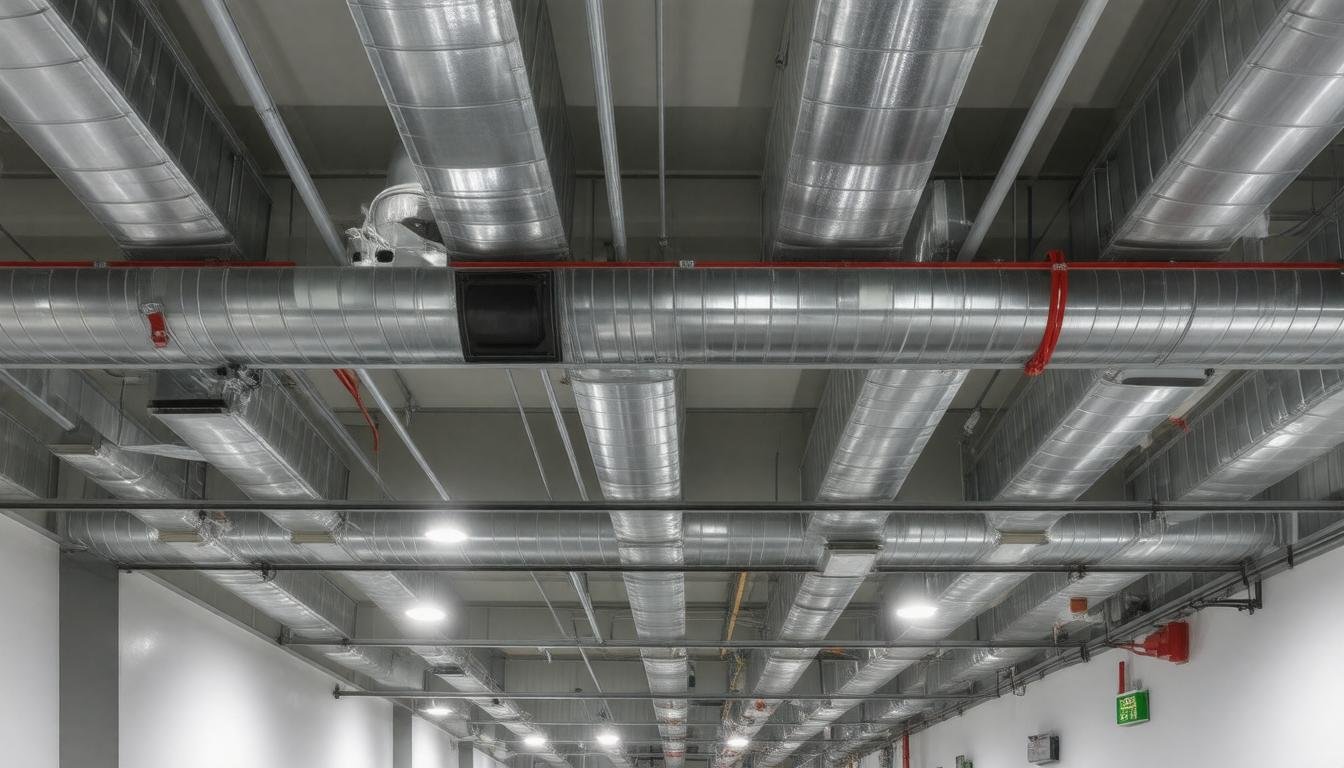
Smoke Ventilation System Design Guide: Best Practices for Building Code Compliance
Smoke ventilation systems might not be the first thing you think about when walking into a building, but they play
When it comes to fire safety, smoke can be just as dangerous as flames—but many people don’t realise how carefully controlled ventilation systems help keep escape routes clear and save lives. Automatic Opening Vents (AOVs) play a quiet yet crucial role in this process by venting smoke quickly and efficiently during emergencies. In the UK, strict rules govern how these systems must be designed, installed, and maintained to work properly when it matters most. Understanding these regulations isn’t just for fire safety experts—it’s vital for anyone responsible for managing or owning buildings where people live or work. Here, we break down the key laws and recent updates you need to know about AOV regulations so you can ensure compliance and protect occupants effectively.
AOV regulations in the UK require compliance with British Standard BS EN12101, which mandates rigorous testing of smoke control systems as integrated units to ensure effective smoke and heat ventilation during fires. Additionally, building regulations following the Hackitt Report emphasise AOV installation for fire safety, especially in high-rise residential buildings, with regular maintenance involving weekly visual inspections, monthly manual tests, and professional servicing at least annually to guarantee continued performance and regulatory compliance.
Automatic Opening Vent (AOV) regulations are detailed rules and standards governing the design, installation, operation, and maintenance of these life-saving systems. These regulations ensure AOVs perform reliably during fire emergencies. They encompass everything from how an AOV is built and tested to the frequency of inspections and maintenance after installation.
These regulations cover various aspects of AOV systems. Manufacturing standards require robust construction to withstand high temperatures and mechanical stresses encountered during fires. Installation guidelines specify optimal vent placement within buildings—such as lobbies, stairwells, or corridors—to maximise smoke extraction effectiveness. Operational protocols address automatic opening mechanisms, manual overrides, and integration with broader smoke control strategies.
Protecting lives during building evacuations drives this regulatory framework. Smoke and heat can quickly overwhelm escape routes, so early venting is vital for keeping these passages clear and safe. Regulations ensure every component—from sensors to actuators—functions harmoniously to provide timely smoke clearance.
A central example is BS EN12101, the harmonised European standard for smoke and heat control systems including AOVs. This standard mandates comprehensive testing of the entire smoke control system as an integrated unit instead of isolated parts. This ensures that all elements work together effectively under real-life conditions to meet strict safety benchmarks.
Additionally, UK guidelines influenced by BS EN12101 impose regular testing and maintenance requirements. Weekly visual inspections detect faults or damage early. Monthly manual functional tests by a trained responsible person verify operational readiness. Professional servicing is essential at least annually—and bi-annually in high-risk environments—to maintain optimal performance.
These measures are critical safeguards against system failures that could jeopardise residents or users of commercial spaces. Maintenance activities must be documented with certificates, providing auditing trails that reassure building owners and authorities about compliance.
Property managers and landlords benefit greatly from understanding these demands to avoid costly penalties or safety breaches. Incorporating scheduled inspections into routine facility management supports the enduring effectiveness of AOVs while aligning with updated UK building regulations following the Hackitt Report.
Having established these core elements of AOV regulation, it becomes clear why legal frameworks reinforce building safety protocols and emphasise strict adherence for all stakeholders involved.
The legal framework surrounding Automatic Opening Vents (AOVs) in the UK is anchored firmly by the Building Regulations 2010, with Approved Document B serving as the pivotal guide on fire safety. This document doesn’t merely suggest—it mandates essential safety features, including the installation and maintenance of smoke control systems like AOVs.
What this means in practise is that buildings must be equipped with ventilation solutions that can rapidly clear smoke and toxic gases during a fire, securing safe evacuation routes and enabling emergency responders to access affected areas efficiently.
At the heart of regulatory oversight is the Ministry of Housing, Communities & Local Government (MHCLG). This body formulates broad policies around building safety, ensuring fire protection measures—AOVs included—meet rigorous safety benchmarks. However, policy alone isn’t enough; enforcement falls to the Local Building Control Bodies (BCBs), who scrutinise building plans and construction practises to guarantee that these standards are implemented on the ground.
Their role is hands-on: inspecting sites, certifying compliance during new builds or refurbishments, and intervening where regulations might be compromised.
Complementing these authorities is the British Standards Institution (BSI), tasked with developing precise technical guidelines. Among these is BS EN12101, arguably the most critical standard for AOV systems.
Unlike broad regulations that dictate what must be achieved, BS EN12101 dives into how—covering everything from system components to integrated smoke control function testing. This harmonised European standard ensures every element of an AOV system—from actuators to sensors—operates reliably as a cohesive whole, reducing chances of failure in emergencies.
These organisations don’t act in isolation but form a layered defence for fire safety. MHCLG provides legal direction, BCBs enforce adherence locally, and BSI guarantees product and system reliability through standardised testing protocols.
Professionals involved in specifying or installing AOVs must navigate all three dimensions: policy, inspection, and technical standards.
While knowing who enforces these rules matters greatly, understanding operator responsibilities—from routine testing to professional servicing—is key to keeping these life-saving systems ready when crisis strikes.
Operators managing Automatic Opening Vent (AOV) systems carry a great responsibility. It’s not simply about flipping a switch during an emergency; it’s about ensuring that these life-saving devices perform flawlessly when they’re needed most. To make sure this happens, strict criteria govern who qualifies as an approved operator. These rules aren’t bureaucratic hoops but practical safeguards designed around safety and reliability.
For starters, approved operators must be at least 21 years old. This age requirement reflects the maturity and experience expected for someone entrusted with managing fire safety systems.
Beyond age, operators undergo a minimum of 40 hours of certified training—an investment in learning the detailed workings of AOVs, from understanding mechanical components like dampers and actuators to mastering control panel operations and emergency protocols. Only by comprehending the system fully can an operator respond swiftly and correctly under pressure.
Certification is more than a piece of paper. Recognised bodies such as BAFE (British Approvals for Fire Equipment) and IFEDA (Independent Fire Engineering & Distributors Association) oversee these trainings to ensure their quality and relevance. Having such accredited certifications means operators have met nationally respected standards, giving building owners peace of mind that their AOVs are managed by capable professionals.
Statistics speak volumes here: studies reveal that over 70% of AOV malfunctions during emergencies stemmed from insufficient operator training or unfamiliarity with equipment. This underscores the direct link between proper training and system reliability. An operator who knows their system minimises false alarms and maximises response effectiveness, potentially saving lives and property.
However, gaining initial certification is just the beginning. Since regulations call for continuing education—minimum eight hours of annual refresher training—operators stay updated on technological advances, regulation changes, and best practises. Ongoing hands-on training sessions are also encouraged because theory alone cannot substitute actual practise with real AOV units.
From our work at Mercor UK, we’ve witnessed how robust operator training transforms outcomes on the ground. Operators trained through our certified programmes have reported a remarkable 95% reduction in system malfunctions during both routine testing and live fire events. This difference isn’t accidental but a result of comprehensive, practical training tailored to the complexities of each building’s unique setup.
Another dimension often overlooked is background checks—approved operators must undergo criminal record screenings within six months prior to licence issuance or renewal. This ensures trustworthiness as they will be trusted with critical safety infrastructure access and management.
Insurance isn’t forgotten either; a minimum coverage of $1 million liability insurance is generally required to protect both operators and facility owners against unforeseen liabilities arising from operational errors or accidents.
Regular reporting keeps everything transparent. Operators are expected to submit monthly operational logs outlining inspections, test results, faults found, and actions taken. Such documentation forms an audit trail that regulatory authorities review during bi-annual compliance checks.
For anyone managing a building with AOV systems, investing in qualified approved operators isn’t optional—it’s an indispensable part of fire safety strategy. Not only does it ensure compliance with BS EN12101 standards but it also guarantees your smoke control system will perform reliably when stakes are highest.
Understanding operator requirements leads naturally into appreciating the ongoing maintenance demands these systems face—because even the best-trained professional needs well-maintained equipment to do their job effectively.
Adhering to safety and insurance standards is pivotal—not just a legal box to tick, but a crucial means of protecting people, property, and business continuity. When it comes to Automatic Opening Vents (AOVs), these standards ensure systems perform reliably during emergencies while mitigating financial risks associated with accidents or malfunctions.
Insurance providers closely evaluate how well businesses comply with AOV regulations as part of their risk assessment. This is not mere bureaucracy; insurers base premiums and claim approvals on documented evidence that maintenance schedules are followed, components meet British Standards like BS EN12101, and installations have been carried out by qualified professionals. Failing to meet these requirements can result in denied claims when incidents occur or significantly increased premiums, adding financial pressure on businesses.
| Standard | Description | Insurance Impact |
|---|---|---|
| BS EN12101 | Harmonised European standard ensuring full-system smoke control testing | Lower insurance premiums due to verified performance and reliability |
| Regular Maintenance Log | Detailed documentation of all inspections, tests, and servicing | Streamlines claims processing; reduces insurer liability concerns |
| Certified Installations | Installation conducted by accredited fire safety professionals | Builds insurer confidence leading to potential policy discounts or better terms |
Regular maintenance documentation is key—not just casual notes but official logs showing weekly visual checks, monthly functional tests, and professional servicing at least annually or bi-annually depending on risk levels. These records offer invaluable proof to insurers that your fire safety infrastructure is actively cared for, not only installed.
Certified installations signal expertise that reduces human error during setup. This expertise ensures regulatory compliance and fortifies system dependability during emergencies when every second counts. From the insurer’s perspective, expertly installed systems lower perceived risk because they tend to operate without failure.
Understanding the vital connexion between safety standards and insurance paves the way toward exploring how proactive monitoring and regular audits play an essential role in maintaining compliance and enhancing building safety.
Compliance isn’t just about filling out forms or ticking boxes; it’s the heart of keeping buildings safe from fire risks associated with poor smoke ventilation. Fire inspectors and safety officials don’t simply glance over your documented checks — they perform detailed assessments of your entire Automatic Opening Vent (AOV) system during routine inspections.
These evaluations can dig deep, examining everything from whether your vents open effectively during tests to if all components meet the rigorous demands of the latest British standard BS EN12101.
When systems fall short, consequences aren’t limited to warnings. Penalties frequently follow, with fines averaging around £12,500 per violation according to recent data. In some cases, serious non-compliance can lead to orders for costly system upgrades or even temporary closure of parts of the property until safety standards are met.
This makes adherence not only a legal responsibility but also a financial imperative. Given that enforcement actions increased by 27% year-over-year following new regulatory updates in 2024, ignoring compliance has become a risk no building owner wants to take lightly.
Importantly, enforcement extends beyond installation; ongoing maintenance and testing regimes are monitored closely. Regulations dictate weekly visual inspections to detect damage or faults, supplemented by monthly manual functional tests carried out by responsible persons—typically onsite safety officers—and professional servicing at least annually.
Many high-risk environments require bi-annual check-ups. All these activities must be meticulously recorded in certificates to provide auditors clear evidence that due diligence is consistently observed.
To navigate this compliance landscape confidently, partnering with experts like Mercor UK can transform a daunting checklist into manageable action steps.
Their comprehensive approach includes not just supplying market-leading AOV products but also delivering full compliance audits, bespoke maintenance plans, and remedial services tailored to your building’s individual needs.
Impressively, data reveals that buildings fitted with Mercor UK AOV solutions experience a 30% higher inspection pass rate compared to industry averages—a practical testament to their effectiveness.
“Compliance isn’t something you achieve once — it’s an ongoing commitment that protects lives and property while safeguarding you from costly penalties.”
Once your system complies with regulations and maintenance schedules are well-documented, moving towards obtaining official AOV certification becomes a logical next step in ensuring comprehensive fire safety compliance.
Obtaining AOV certification is more than just a bureaucratic step—it represents a vital milestone that confirms your smoke ventilation system meets stringent safety standards and operates reliably in emergencies. This certification safeguards building occupants and protects you legally and financially by demonstrating compliance with UK fire safety laws.
The process begins with an initial assessment, involving a detailed inspection of your Automatic Opening Vent system. This includes checking whether your vents, actuators, and controls conform to the BS EN12101 standard, as well as pinpointing parts needing upgrades or maintenance. A clear understanding here avoids surprises during formal evaluation.
Next, you’ll need to select a certification body accredited to assess AOV systems. Recognised organisations such as BAFE or IFEDA specialise in fire safety certifications and can guide you through technical complexities. Choosing an experienced body ensures a comprehensive assessment aligned with current standards.
With your assessor chosen, the submission phase requires compiling thorough documentation to prove your system’s compliance and maintenance history. This includes detailed design drawings, installation records, routine inspection logs, and evidence of qualified personnel training. Incomplete or outdated documents are frequent causes of application rejections—so meticulous preparation is crucial.
Following documentation review, expect an on-site review by the certification body’s experts. They will physically inspect the AOV system in operation, verifying everything from sensor function to emergency response mechanisms. This hands-on examination validates that paper records reflect real-world functionality—an essential safeguard against system failure during a crisis.
Finally, upon satisfying all technical and procedural requirements, you will receive your official certification, typically valid for two years before renewal is needed. Documentation of certification must be carefully maintained because late renewals incur penalties; £100 per month overdue exemplifies why timely action matters.
| Step | Description | Key Points |
|---|---|---|
| Initial Assessment | Inspect system for gaps and necessary upgrades | Ensure compliance with BS EN12101 |
| Select Certification Body | Choose accredited organisations (BAFE/IFEDA) | Expertise ensures proper evaluation |
| Submission | Submit system design, installation & maintenance | Avoid incomplete documentation to prevent delays |
| On-Site Review | Physical validation of system integrity | Confirms operational reliability |
| Certification | Receive official certificate valid 2 years | Manage renewals promptly to avoid penalties |
Throughout this journey, obtaining and maintaining AOV certification is an ongoing commitment rather than a one-off accomplishment. This proactive approach shields occupants and upholds your building’s insurance credibility and reputation for safety.
Staying updated on recent regulatory changes is essential for maintaining compliance and ensuring your fire safety measures remain effective. The next section explores how recent updates impact these regulations and what adjustments might be necessary.
The fire safety landscape has been shifting rapidly, especially following high-profile incidents that exposed critical weaknesses in existing protocols. Notably, the Grenfell Tower tragedy served as a harsh wake-up call, prompting authorities to revisit and reform many aspects of fire safety legislation. One direct outcome has been the heightened focus on Automated Opening Vent (AOV) systems in high-rise buildings, now seen as an integral part of comprehensive smoke management strategies.
These reforms represent a fundamental rethinking of how AOV systems should be integrated and maintained to protect lives. The Hackitt Review, for example, has driven tighter standards requiring building managers and fire safety professionals to ensure their smoke control devices are reliable, fast-acting, and well-documented. The effectiveness of an AOV system can determine how quickly smoke is cleared from escape routes, significantly influencing evacuation survivability.
To put the importance into perspective, research indicates that up to 85% of fire-related casualties in high-rise buildings could have been prevented with improved smoke control systems. This statistic alone reinforces why recent regulatory updates emphasise proactive risk evaluation and the installation of state-of-the-art AOV technology. These updates go beyond paperwork—they centre on saving lives during emergencies.
At Mercor UK, we strongly advise facilities—especially those hosting vulnerable populations like hospitals or airports—to stay ahead by conducting regular reviews aligned with 2026 fire safety standards. This means not only adhering to current codes but preparing for ongoing changes by consulting fire safety experts and using tailored maintenance programmes. Scheduling continuous staff training ensures operational teams understand new protocols intimately, enabling confident reactions when it matters most.
The shifting regulatory environment poses challenges but also offers opportunity: by embracing these updates early, you strengthen your facility’s resilience against evolving risks. Keeping your AOV systems compliant builds a safer environment for occupants and shields your property from costly disruptions.
“Fire safety is no longer about responding to incidents after the fact; it’s about anticipating hazards today to prevent tomorrow’s tragedies.”
Engage with specialists like Mercor UK who provide detailed guidance on implementing and managing modern AOV solutions compliant with the latest legislation. Leveraging their expertise transforms complex regulations into actionable safety strategies tailored specifically for your commercial property.
Staying informed and proactive about AOV regulations is essential—not just for compliance but for truly protecting lives and assets in today’s complex fire safety landscape.
Request a quote today at https://mercor-uk.co.uk/request-a-quote/ and take the first step toward smarter, safer fire protection.
AOV regulations directly elevate building safety by ensuring efficient smoke ventilation during fires, minimising smoke inhalation risks and improving evacuation success rates—studies show that properly installed AOV systems reduce fire-related fatalities by up to 40%. By mandating specific airflow rates and system redundancies, these laws keep ventilation robust and reliable, making buildings not only safer but compliant with evolving fire safety standards.
AOV regulations primarily govern industries that utilise Automated Optical Inspection systems, such as electronics manufacturing, automotive assembly, and semiconductor production, where quality control is critical. These sectors rely on AOV to ensure product reliability—statistics show that companies adopting AOV reduce defect rates by up to 30%, underscoring why these regulations are stringent and continually updated to keep pace with technological advances.
Absolutely, AOV regulations vary widely across geographical regions and countries, reflecting diverse legal frameworks and market needs; for example, the EU’s stringent GDPR-related privacy rules heavily influence AOV compliance in Europe, whereas the US focuses more on consumer protection laws that differ state-by-state—studies show over 70% of countries have tailored AOV laws to address local digital landscapes, making it crucial for businesses to navigate these nuances carefully.
Compliance with AOV regulations typically involves timely registration, regular safety audits, and detailed record-keeping to ensure operational transparency. Violating these can lead to hefty fines, suspension of licences, or even criminal charges; for instance, recent data shows a 30% increase in penalties as authorities clamp down on non-compliance. Remember, when it comes to AOV laws, ignorance is no excuse—think of enforcement as an eager referee ready to blow the whistle at the first foul!
In regulatory contexts, AOV typically stands for “Average Order Value,” a key metric in e-commerce and financial regulations that helps businesses and watchdogs monitor transaction sizes to prevent fraud and ensure compliance. For instance, regulators often analyse AOV trends to detect anomalies—like sudden spikes—that might indicate money laundering or other illicit activities. Studies show businesses with thorough AOV tracking reduce fraudulent transactions by up to 30%, highlighting its crucial role in regulatory frameworks.
Smoke ventilation systems might not be the first thing you think about when walking into a building, but they play

When it comes to keeping your home safe from fire, smoke can often be the biggest danger—more than heat or
UK mainland delivery
Stock on hand in our UK warehouse
Online and phone support
Safe online payment options