
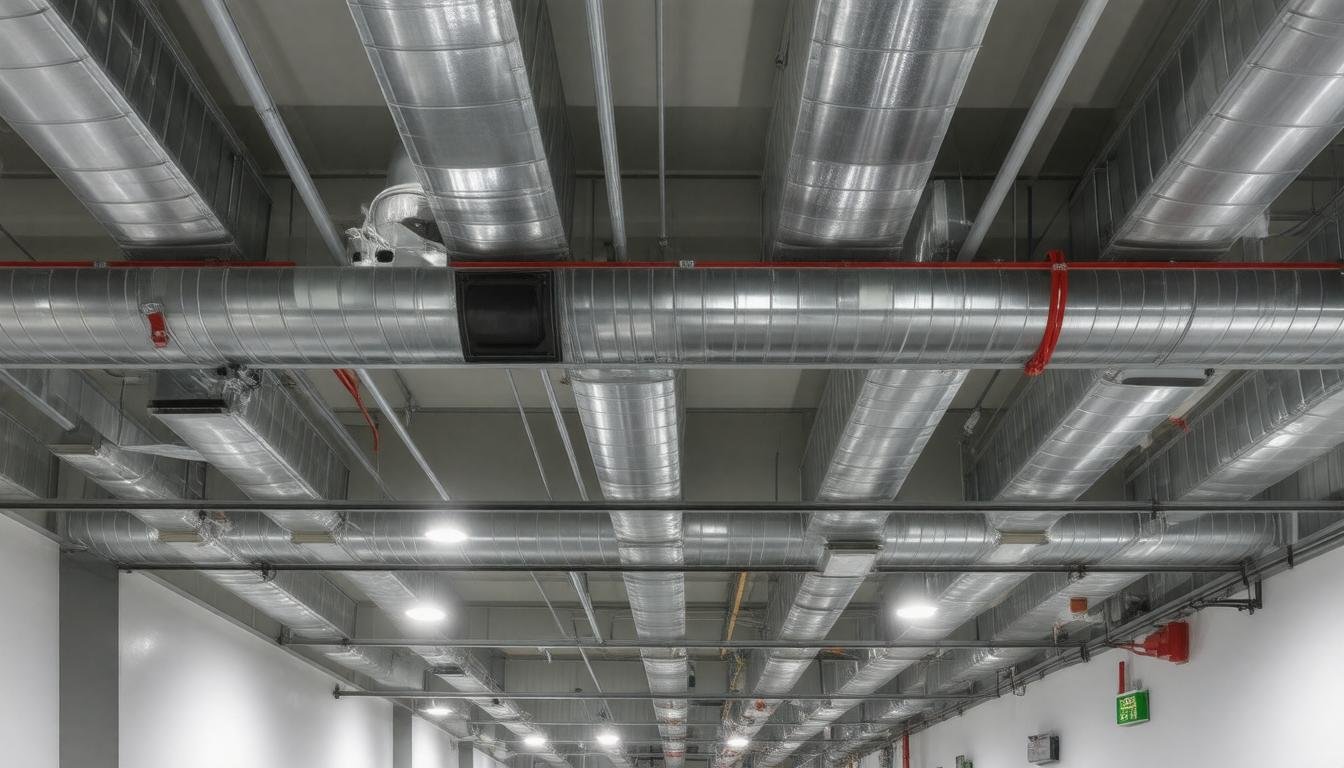
Smoke Ventilation System Design Guide: Best Practices for Building Code Compliance
Smoke ventilation systems might not be the first thing you think about when walking into a building, but they play
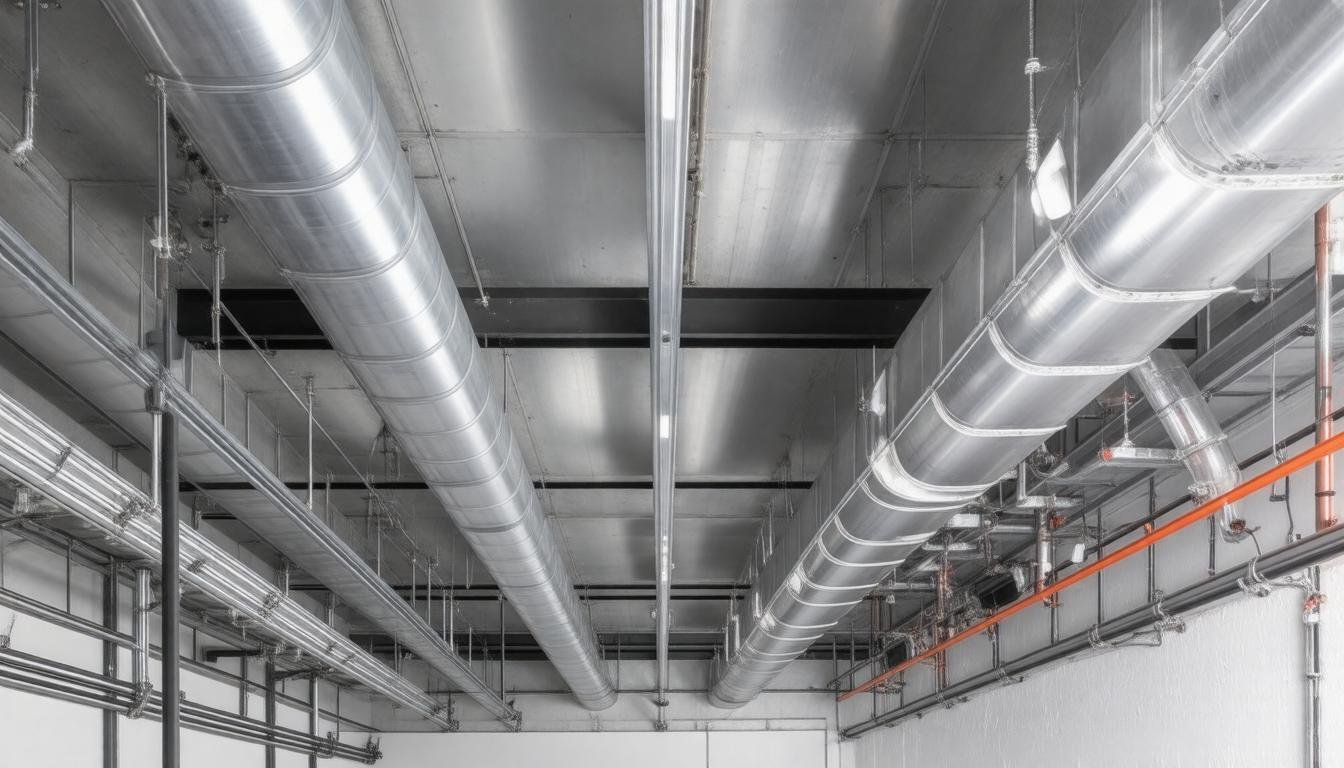
When it comes to keeping buildings safe during a fire, smoke is often the silent enemy. It spreads quickly, making it hard to breathe and see, turning what should be a clear escape route into a dangerous maze. That’s where commercial smoke ventilation systems come in—they work behind the scenes to pull smoke out fast, giving people the best chance to get out safely and firefighters the visibility they need to do their job. This article breaks down how these systems work, the types available, and why choosing the right one can make all the difference when every second counts.
Commercial smoke ventilation refers to specialised systems installed in commercial buildings to automatically extract smoke during a fire, ensuring clear escape routes, reducing heat and toxic gas exposure, and enhancing firefighter access. These systems comply with strict standards such as EN12101 and BS7346-8, employing either natural or mechanical ventilation methods to protect occupants and minimise property damage effectively.
Commercial smoke ventilation systems primarily fall into two categories: natural and mechanical. Each serves a distinct purpose and fits specific building designs and operational demands. Natural ventilation relies on strategically placed vents, such as roof louvres or windows, that open manually or automatically. These openings harness natural forces—wind pressure and thermal buoyancy—to allow smoke to rise and escape.
This method works exceptionally well in low-rise and simpler architectural layouts, where external environmental conditions can assist airflow.
While natural ventilation tends to be more energy-efficient and less costly upfront, it comes with the limitation of dependency on weather conditions. On a calm day or when winds are unfavourable, the ability of these vents to evacuate smoke effectively diminishes.
This unpredictability is why buildings with straightforward layouts and manageable heights often find natural systems an economical choice but must consider occasional performance limitations.
Moving beyond natural methods, mechanical smoke ventilation systems take a more proactive approach by employing powerful fans, ducts, and sensors to extract smoke at speeds far exceeding what nature alone can manage. This is particularly critical in complex or high-rise buildings, where relying on wind patterns or temperature differences is insufficient to keep escape routes free from dangerous smoke accumulation.
Mechanical systems maintain controlled airflow regardless of external conditions by balancing pressure differentials; they can achieve 1.5 to 3 air changes per minute, effectively flushing smoke out up to three times faster than natural ventilation. The heavy-duty fans in systems like Mercor’s mcr WIP LD series pull smoke away rapidly while fresh air enters through lower-level inlets—a coordinated chimney effect crucial for occupant safety during fires.
Of course, this enhanced performance requires a higher investment—not just for installation but also ongoing maintenance such as regular sensor calibration and fan checks to ensure reliability. However, the upside is a robust system that provides consistent protection, reduces heat build-up by about 20-40%, lowers smoke temperatures significantly, and offers firefighters better visibility and safer access.
According to research, mechanical systems have demonstrated their capability to reduce smoke density inside large buildings by up to 70%, dramatically improving escape times and safety outcomes during fires.
For many commercial properties, especially those with mixed-use characteristics or varying floor heights, hybrid approaches combining both natural and mechanical systems offer balanced advantages—optimizing energy efficiency without compromising performance.
When specifying a smoke ventilation solution, it’s essential to carefully evaluate your building’s size, occupancy levels, climate influences, complexity of layout, and compliance requirements with standards like EN12101-2 and EN12101-3. Consulting specialists like Mercor Fire Protection UK Ltd ensures access to tailored products such as natural roof louvres designed for optimal aerodynamic flow or high-capacity mechanical lobby dampers with rapid response controls—all supported by expert technical guidance and reliable UK-based delivery.
Building on this knowledge about ventilation types creates a framework for understanding how thoughtful design choices can transform fire safety strategies into effective solutions tailored to your building’s unique challenges.
Constructing an effective smoke ventilation system isn’t as simple as putting vents and fans here and there. It demands careful planning and understanding of your building’s unique layout and risks to ensure your system keeps escape routes clear and protects occupants during a fire. The design process begins with a thorough assessment of your building—knowing exactly where smoke is likely to gather allows you to target those critical areas efficiently.
Step I — Site Assessment involves walking through the building and identifying high-risk zones like stairwells, corridors, lobbies, and refuge areas. These are spaces where smoke can quickly accumulate and endanger people trying to escape or firefighters entering the scene. Studies have shown that stairwells, in particular, can become smoke-logged within minutes without proper ventilation, turning safe escape routes into dangerous traps. Recognising these vulnerable spots early shapes where and how your ventilation needs to perform.
Once you know where the problem areas are, the next focus is placing vents in positions that harness natural airflow dynamics or mechanical force effectively.
Step II — Vent Placement is about using physics to your advantage. Smoke naturally rises due to heat causing it to be less dense than cooler air around it. Placing roof vents at the highest points allows this hot smoke to exit naturally if you’re using a natural ventilation system. Meanwhile, low-level inlets bring fresh air in, creating a chimney effect that pushes smoke upward and out.
In mechanical systems, heavy-duty fans might pull smoke steadily through ducting but still benefit from strategic vent positioning to maximise flow rate and minimise turbulence. Getting vent placement right not only improves smoke removal efficiency but also reduces costly over-engineering by targeting airflow where it’s needed most.
However clever the vent arrangement, it must act swiftly when fire strikes; this calls for smart integration with the building’s safety infrastructure.
Step III — System Integration ensures your smoke ventilation setup works seamlessly with existing fire alarms, sensors, and control panels. Modern systems—like those available from Mercor Fire Protection UK Ltd—activate vents automatically within 60 seconds of smoke detection.
This rapid response keeps escape routes clearer for longer, lowers toxic gas exposure, and assists firefighters by improving visibility inside smoky environments. Reliable integration means your building’s safety ecosystem acts as one unit instead of disjointed parts—truly safeguarding lives.
Here’s a concise breakdown of these design steps:
| Design Step | Key Focus | Why It Matters |
|---|---|---|
| Site Assessment | Identify high-risk smoke zones | Targets protection where it counts |
| Vent Placement | Position vents for optimal flow | Uses natural physics & mechanical aid |
| System Integration | Connect with alarms/control panels | Ensures automatic, fast vent activation |
From my experience working alongside professionals at Mercor Fire Protection UK Ltd—who combine decades of expertise with cutting-edge products stocked locally for quick delivery—successful designs always start with meticulous site evaluation, followed by thoughtful vent locations, then capped with robust system automation. Skipping any one part can compromise overall effectiveness and leave occupants vulnerable.
Designing fire safety ventilation isn’t just technical work—it’s about anticipating dangers before they happen and engineering calm amidst chaos. When done right, these systems save precious seconds during emergencies that make all the difference between safe evacuation and tragedy.
Understanding the fundamentals of fire safety ventilation is just the beginning. Next, we explore how advanced ventilation techniques further enhance building safety measures, creating environments that protect both occupants and property more effectively.
Smoke ventilation systems serve as silent guardians during a fire, working tirelessly to keep escape routes free of smoke and toxic gases. When hallways, stairwells, and lobbies remain clear of dense smoke, people inside can evacuate with far less confusion and panic. This clarity is not just a convenience—it is a critical factor that can save lives.
According to data from the National Fire Protection Association (NFPA), buildings equipped with functional smoke ventilation systems see survival rates increase by up to 50% due to improved evacuation conditions. This statistic reveals how smoke control technology shifts the odds significantly in favour of occupants during emergencies.
To ensure evacuation routes stay open and breathable, it’s crucial that smoke ventilation systems are correctly designed, installed, and regularly maintained. Failure to do so often results in blocked corridors or staircases filled with hazardous smoke layers, making escape slow and dangerous.
In practise, this means using high-quality dampers, vents, and fans that activate promptly when smoke is detected, and ensuring they comply with recognised standards like EN 12101 and BS 7346-8. Systems such as Mercor UK’s mcr PROLIGHT E 100/150 Roof Vent exemplify the kind of robust equipment capable of rapidly venting smoke away from escape paths with precise control.
Beyond aiding occupants’ safe exit, smoke ventilation plays another vital role—enhancing firefighter operations. Imagine entering a building where thick smoke instantly obscures vision and poisons the air; firefighting efforts become painstakingly slow and far more perilous.
Proper ventilation reduces the temperature of the smoke layer by up to 50%, improving visibility dramatically and lowering exposure to toxic gases. This faster clearance allows firefighters to access fires sooner, perform rescues effectively, and deploy extinguishing tactics more confidently.
Fire Chief Mark Bennett encapsulates this advantage succinctly:
“A well-ventilated building allows us to perform our duties more effectively and safely.”
His experience underlines how integral smoke ventilation systems are—not just for occupants but for emergency responders too.
Another dimension often overlooked is how controlled ventilation prevents excessive heat buildup within a building’s framework. By removing hot smoke rapidly, these systems reduce the risk of flashover—a sudden ignition of all combustible materials in an enclosed area—which can cause catastrophic damage.
Studies show that timely smoke extraction can lower structural damage by 20-40%, preserving both the integrity of the building and reducing subsequent repair costs.
This protective effect extends the life span of critical components such as steel beams, masonry joints, and electrical wiring that would otherwise degrade under prolonged heat exposure. Maintaining these elements contributes directly to overall fire resilience and ensures buildings remain safe for occupation after incidents.
Selecting between natural or mechanical smoke ventilation—or even hybrid solutions—depends heavily on a building’s size, complexity, and usage patterns.
Where tall skyscrapers or sprawling complexes require powerful mechanical fans to maintain adequate air changes per minute (ACM), smaller low-rise structures can benefit from cost-effective natural ventilation relying on temperature differentials and wind.
| System Type | Typical ACM Range | Advantages | Considerations |
|---|---|---|---|
| Natural Ventilation | 0.5 – 1.0 | Energy-efficient, lower maintenance costs | Weather-dependent, less control |
| Mechanical Ventilation | 1.5 – 3.0 | Reliable performance, fast smoke removal | Higher cost, requires regular upkeep |
| Hybrid Systems | Varies | Balances energy use with performance | Complexity in integration |
Employing experienced fire safety specialists—like those at Mercor Fire Protection UK Ltd—can ensure your ventilation system is tailored precisely to your building’s requirements while meeting rigorous British and European standards.
Their expertise also ensures seamless integration with alarm panels for swift automatic activation within seconds of detecting smoke.
Effective smoke ventilation elevates building safety on multiple fronts—from protecting human life through clear escapes and firefighting support to safeguarding infrastructure itself against fire’s worst effects.
As fire risks remain an ever-present concern in commercial environments, investing in quality ventilation solutions backed by expert knowledge provides peace of mind that goes beyond mere compliance—it’s about valuing safety at every level.
For advice on selecting or upgrading your building’s smoke ventilation system with fast UK delivery on stocked products such as lobby dampers or roof vents, contact Mercor Fire Protection UK Ltd at 0161 359 8309 or visit https://mercor-uk.co.uk/. Their technical team is ready to guide you toward optimal fire safety solutions tailored specifically for your needs.
With a firm understanding of how effective ventilation safeguards lives and property, the discussion naturally advances toward navigating the legal frameworks that govern these essential safety measures. Recognising regulatory expectations ensures that your installation is not only effective but also compliant with the law.
When installing smoke ventilation systems, adherence to established building codes isn’t optional—it’s a mandatory safeguard that guarantees system reliability during emergencies. These codes not only dictate what equipment is acceptable but also how it must perform when faced with fire and smoke conditions.
Central to compliance are standards like EN12101, which specify rigorous requirements for smoke and heat control systems. For example, EN12101-3 focuses specifically on mechanical smoke ventilation, demanding that fans and associated machinery withstand temperatures up to 600°C for at least 30 minutes without failure. This ensures systems remain operational long enough to clear smoke, maintaining survivable escape routes and better firefighter access.
To clarify, EN12101-3 establishes test methods and performance criteria that guarantee mechanical ventilation components—such as fans, actuators, and dampers—function reliably and safely under extreme fire conditions. These standards shape design considerations from material selection to control system responsiveness.
At Mercor Fire Protection UK, our products exemplify this commitment, meticulously engineered to meet or exceed these standards. Our smoke ventilation dampers, fans, and actuators are designed with these regulatory benchmarks in mind, delivering both peace of mind and compliance assurance for building owners and designers alike.
Achieving legal compliance extends beyond selecting certified products; it’s about holistic design that respects local building regulations. Early consultation with fire safety engineers is indispensable—they bring expertise to tailor solutions that fit a building’s unique layout while conforming to statutory fire safety requirements.
When you incorporate such expert insights from the outset, you avoid costly redesigns or compliance pitfalls later. Regulations can differ between jurisdictions even within the UK, making familiarity with both national standards (such as BS7346-8) and local guidelines crucial for successful installation.
If you’re involved in specifying or managing ventilation systems, maintain an active dialogue with reputable suppliers like Mercor UK. Our technical support team helps ensure your project aligns perfectly with current laws and standards while optimising safety outcomes.
Ultimately, regulatory compliance is not merely bureaucratic red tape; it’s a comprehensive framework crafted from hard lessons learned in past tragedies. By strictly adhering to these building codes, developers protect occupants’ lives and reduce liability risks, creating safer buildings prepared for unforeseen fires.
With a solid grasp of legal mandates in place, attention naturally shifts toward integrating these safety systems seamlessly within existing architectural frameworks—balancing stringent codes with practical implementation challenges.
Retro-fitting a smoke ventilation system into an existing building structure can be complex but entirely feasible. Older buildings often weren’t originally designed with modern smoke control in mind, so introducing new systems demands a careful look at how all components will connect and communicate effectively.
One of the key considerations when adding a smoke ventilation system is ensuring it’s compatible with the building’s current fire alarms, HVAC units, and emergency control panels. This isn’t just about hooking devices together; it’s about creating a cohesive network where systems talk to each other and respond swiftly and reliably during an emergency.
For example, Mercor’s mcr PROLIGHT E Automatic Opening Vent is designed with adaptability in mind—it integrates fluidly with existing alarm and control setups through its versatile control panel.
This means when smoke sensors detect an incident, the system instantly signals vents to open while coordinating with the fire alarm to ensure occupants are alerted immediately. Such integration reduces lag time and prevents conflicting signals between devices, which can be critical during fire evacuation.
Practical experience shows that systems like these, which “plug and play” with pre-installed infrastructure, significantly simplify the retro-fit process and bolster overall reliability.
Another important factor during integration is limiting disruption to the building’s day-to-day operations. Nobody wants extensive downtime or noisy construction slowing down business activities or inconveniencing residents. That’s why modular designs—like those from Mercor—offer a strategic advantage.
These modular units can be installed in phases, allowing certain sections to stay operational while work proceeds elsewhere. For instance, installing mcr WIP LD 1.0 GFA Lobby Dampers one floor at a time means occupants seldom face complete shutdowns. This staged approach preserves productivity and limits disturbances, all while progressively upgrading safety features.
To achieve smooth integration, it helps to coordinate closely with fire safety professionals who understand both legacy building systems and contemporary ventilation technology. They can map out installation plans that balance thoroughness with timing, ensuring compliance without upending daily routines.
In essence, blending new smoke ventilation controls into older infrastructures demands a blend of technological compatibility and practical installation strategy—qualities embedded in Mercor Fire Protection UK Ltd’s solutions for commercial buildings nationwide.
If you’re considering upgrading your building’s smoke control capabilities with minimal fuss and expert support, Mercor offers UK-stocked products ready for quick delivery alongside full technical assistance—ensuring your retrofit project stays on track and compliant every step of the way. You can reach their Manchester office weekdays at 0161 359 8309 to speak directly with knowledgeable staff eager to help tailor the right solution for your property.
Understanding how these systems fit into existing frameworks is only part of the story. Next, we explore how to measure their effectiveness once installed, ensuring that safety is not just promised but proven through rigorous performance evaluation.
Regular performance evaluations are essential for confirming that a commercial smoke ventilation system not only exists on paper but actively protects occupants and property when fire strikes. This means scheduling periodic tests that simulate real-world conditions to see if the system activates promptly and effectively expels smoke.
Simply put, it’s about verifying that the fans, dampers, sensors, and controls all respond as designed, maintaining the safety of escape routes and minimising hazardous smoke build-up.
Key measurements in these assessments include airflow rates—ideally matching or exceeding the system’s design specifications—and response times, which should be rapid enough to activate smoke extraction within seconds of detection. Standards like EN 12101-3 specify rigorous thresholds that mechanical ventilation systems must meet to be compliant.
A slowdown in fan speed or delay in damper actuation during testing could signal a system no longer up to standard, potentially risking occupant safety.
It’s crucial to approach testing as more than just ticking a box for compliance; instead, treat it as an ongoing commitment to operational readiness. Regular drills and inspections identify subtle issues before they escalate.
Perhaps sensors drift out of calibration, or ductwork partially obstructed by debris reduces effectiveness. Identifying such problems early avoids costly repairs or dangerous failures later on.
Maintenance isn’t limited to cleaning or replacing components. Sensor recalibration is vital because even slight deviations can result in late activations or false alarms. Mercor Fire Protection UK, with nearly four decades of international expertise, provides comprehensive technical support and tailored maintenance packages designed precisely to keep your systems calibrated and reliable.
Adjustments may also involve tuning control panels or updating software to align with evolving regulations or building modifications. Keeping systems flexible ensures they remain effective regardless of changes in building occupancy or layout.
“A well-maintained smoke ventilation system is a proactive safeguard; its real value shows when every component functions flawlessly under pressure.”
For building managers and safety officers, establishing a clear schedule backed by thorough documentation simplifies audits and regulatory inspections—making your fire safety efforts transparent and demonstrably effective.
| Best Practises for System Maintenance | Description |
|---|---|
| Plan regular test intervals | Quarterly operational checks and annual full-system inspections ensure consistent readiness. |
| Use calibrated instruments | Accurate measurement of airflow velocity, temperature thresholds, and response time is critical. |
| Document results | Maintaining detailed logs tracks system trends and helps detect gradual wear. |
| Engage certified professionals | Specialists like Mercor UK deliver expert diagnostics and corrective actions. |
Monitoring system performance bridges the gap between installation and actual peace of mind. By investing in rigorous evaluation protocols combined with professional maintenance services, businesses ensure their smoke ventilation solutions perform flawlessly when lives depend on them.
Beyond performance assessment, understanding common issues discovered during evaluations further empowers operators to maintain top-tier fire safety year-round. Exploring new technologies next reveals how innovation continues to enhance smoke ventilation effectiveness across diverse building environments.
Today’s smoke ventilation systems are no longer just simple mechanical or natural configurations. They have evolved into highly intelligent networks equipped with smart sensors and Internet of Things (IoT) integration that continuously monitor system health and environmental conditions.
These capabilities allow real-time diagnostics, enabling facility managers to respond immediately to any irregularities or malfunctions before a fire event even occurs. For instance, temperature and smoke density sensors communicate instantly with control panels to activate vents or fans, ensuring rapid smoke extraction without delay.
Beyond basic activation, advanced artificial intelligence (AI) algorithms now analyse data patterns from multiple sensors across a building to predict fire spread trajectories. This predictive modelling enables dynamic adjustment of ventilation openings and fan speeds tailored to the specific location and severity of the fire.
Instead of a static response, the system becomes adaptive—actively optimising airflow to channel smoke away from evacuation routes and minimise exposure hazards for occupants and firefighters alike.
With sustainability an increasing priority, modern smoke ventilation devices incorporate energy-efficient motors, low-power sensors, and sustainable materials engineered for durability and low maintenance. Such innovations reduce operating costs while aligning with broader environmental goals.
For example, Mercor’s latest mechanical ventilation systems achieve significant reductions in carbon emissions while maintaining over 90% reliability in emergency activation scenarios.
This synergy of smart technology and energy-conscious design is crucial as buildings become more complex and regulatory standards tighten worldwide.
Businesses must weigh not only initial installation costs but also long-term savings through improved efficiency, reduced downtime, and compliance with evolving codes such as EN12101.
To explore cutting-edge smoke ventilation solutions adapted to your building’s unique needs, including full technical support and fast UK delivery, visit Mercor Fire Protection UK.
Their expertise spans 40 years globally, combined with comprehensive local support from their Manchester base—a partnership focused on safeguarding lives through smarter fire safety technology.
Embracing these advances not only enhances safety but ensures your building remains compliant with modern fire protection standards.
Request a quote today at https://mercor-uk.co.uk/request-a-quote/ to secure reliable, innovative smoke ventilation tailored to your needs.
Commercial smoke ventilation systems should be inspected and maintained at least twice a year to ensure optimal performance and compliance with safety standards. Regular checks catch potential failures before they turn into costly disasters—studies show that timely maintenance reduces system malfunctions by up to 40%. After all, in fire safety, it’s not just about having the system, but making sure it works when smoke decides to throw a house party uninvited.
Commercial smoke ventilation design and installation must adhere to strict regulations such as NFPA 204 and EN 12101-6, which set performance criteria for smoke control systems to ensure occupant safety and property protection. Compliance with local building codes like the International Building Code (IBC) is also crucial, as these standards collectively reduce fire-related casualties by up to 30%, proving that well-regulated smoke ventilation isn’t just a legal checkbox — it’s a lifesaver wrapped in engineering brilliance.
Commercial smoke ventilation systems dramatically enhance fire safety by rapidly expelling smoke, reducing toxic fume exposure, and improving visibility, which is crucial for occupant evacuation. Studies show that effective smoke ventilation can increase escape time by up to 50%, decreasing casualty risks significantly. By maintaining clearer escape routes and lowering temperatures, these systems ensure safer, faster evacuations and help firefighters tackle blazes more efficiently—proving that good smoke control isn’t just smart; it’s life-saving engineering.
In commercial buildings, the most common smoke ventilation systems are natural smoke vents, mechanical smoke extraction, and pressurisation systems—each tailored to ensure swift smoke removal and occupant safety; for instance, natural vents harness rooftop openings for buoyant smoke escape, while mechanical systems use fans to actively extract pollutants, collectively reducing smoke density by up to 80% during a fire event according to industry stats, making them indispensable safety solutions.
The key components of an effective commercial smoke ventilation system are strategically placed smoke vents, powerful extraction fans, and intelligent control panels that activate automatically during a fire. These elements work in harmony to remove toxic gases and heat swiftly, significantly improving occupant safety; studies show that proper smoke ventilation can reduce smoke density by up to 70%, enhancing visibility and reducing evacuation times drastically. Standards like EN 12101 underline the importance of designing these systems to integrate seamlessly with building architecture while ensuring compliance and reliability.
Smoke ventilation systems might not be the first thing you think about when walking into a building, but they play
When it comes to keeping your home safe from fire, smoke can often be the biggest danger—more than heat or
UK mainland delivery
Stock on hand in our UK warehouse
Online and phone support
Safe online payment options