
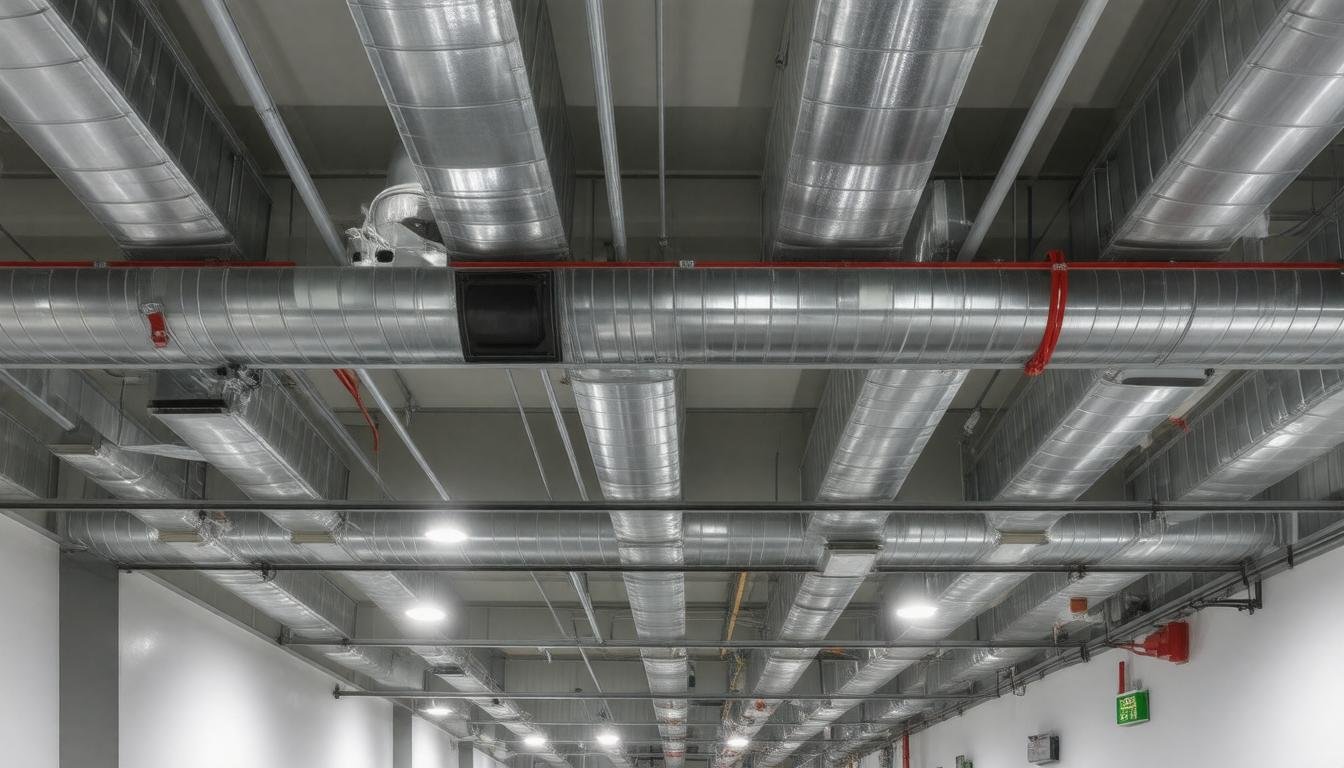
Smoke Ventilation System Design Guide: Best Practices for Building Code Compliance
Smoke ventilation systems might not be the first thing you think about when walking into a building, but they play

When it comes to fire safety in residential flats, smoke vents might not be the first thing on your mind—but they play a crucial role in keeping people safe. Smoke can spread quickly through corridors and stairwells, making escape routes dangerous or even unusable during a fire. That’s where smoke ventilation systems step in, quietly working behind the scenes to clear the air and help residents get out safely. In this article, we’ll explore how these systems work, the rules that guide their installation, and practical tips to make sure your building’s smoke vents do their job when it matters most.
Smoke ventilation systems in residential flats are critical for ensuring safe evacuation during a fire by rapidly extracting smoke from communal areas such as corridors and stairwells. These systems typically use automatic natural or mechanical smoke vents that activate upon smoke detection, maintaining clear escape routes and reducing heat and toxic gas exposure. Compliance with UK standards such as EN12101 and BS7346-8 is essential, and solutions should be tailored to the building layout to provide effective airflow and pressure differentials that prevent smoke spread between flats.
Smoke vents are not just technical features tucked away in building designs—they are vital life-saving systems that work quietly but effectively when disaster strikes. In the confined spaces of residential flats, smoke can quickly overwhelm corridors and stairwells, turning what should be safe escape routes into perilous traps. The real danger doesn’t come from flames alone but from the thick smoke loaded with toxic gases that rapidly reduce visibility and suffocate occupants. This silent threat makes smoke ventilation indispensable for protecting residents.
The purpose of a smoke vent system is to remove this hazardous smoke and heat swiftly, maintaining clear, breathable paths to safety. These vents activate automatically once smoke or heat is detected, opening strategically placed high-level openings to release smoke while drawing fresh air through lower-level inlets. This airflow creates a controlled path for smoke to exit without spreading, reducing the toxic environment inside the building. Without such systems, as tragically seen in past fires like Grenfell Tower, smoke layers become denser and hotter, severely impeding evacuation and firefighting efforts.
Studies confirm that good smoke ventilation can reduce smoke temperature by up to 50%, significantly lowering the risk of heat-related injuries during evacuation. Additionally, keeping escape routes free from smoke improves visibility so residents can confidently find exits, even under high-stress conditions. From a structural perspective, these systems also help minimize damage by controlling heat buildup, limiting the chance of dangerous phenomena like flashover—which occurs when a whole compartment ignites simultaneously.
Smoke ventilation systems come in two primary forms: natural and mechanical. Natural ventilation uses the building’s architecture combined with wind pressure and thermal buoyancy to encourage smoke to exit through roof vents or façade openings. It’s ideal for well-ventilated or taller buildings where airflow can be harnessed effectively. Mechanical systems employ fans and dampers to actively push out smoke and bring fresh air in, making them suitable for dense residential blocks or complex layouts where passive airflow isn’t enough. Both designs aim to maintain a pressure difference—usually between 50 to 100 Pascals—to ensure smoke doesn’t enter escape routes.
For residential flat complexes, integrating an automatic smoke ventilation system connected directly to fire alarm sensors is the safest approach. These systems activate within seconds of detecting smoke without relying on human intervention—a critical factor when every moment counts during a fire emergency. Regular testing and maintenance keep these systems functioning reliably, ensuring consistent protection for residents year-round.
Beyond safety, well-maintained smoke vents contribute positively to building management by reducing repair costs linked to fire damage and enhancing occupant confidence in emergency preparedness. For building owners and managers navigating UK regulations like EN12101 and BS7346-8, choosing certified solutions such as those offered by Mercor Fire Protection UK ensures compliance alongside robust performance. With Mercor’s range—including lobby dampers and roof vents stocked right here in Manchester—flats gain access to cutting-edge technology backed by nearly four decades of global experience.
“Effective smoke ventilation transforms evacuation from chaos into order, saving lives by keeping escape routes safe long enough for residents to reach help.”
With a clear appreciation of their critical role in residential settings, it’s essential next to explore how various smoke ventilation technologies function in practice and understand key regulations guiding their installation and maintenance.
Smoke ventilation systems generally fall into two broader categories: natural and mechanical. Natural ventilation hinges on simple physical principles—hot smoke rises, and when vents or windows open, smoke escapes without the need for powered equipment. This relies heavily on building design and environmental factors like wind and temperature. Often equipped with automatic actuators, these vents open promptly during a fire, assisting in clearing smoke with minimal energy consumption and maintenance requirements.
Natural ventilation’s simplicity is its greatest strength. However, it’s also limited by external conditions and building layout. For instance, on calm days with no wind pressure, the system depends entirely on heat-driven airflow. In residential flats with complex layouts or lower ceiling heights, this can slow smoke extraction. But thanks to modern engineering—like Mercor Fire Protection UK’s specialized roof louvres and lobby dampers—natural systems can be effectively integrated into many designs while meeting stringent safety standards such as EN12101.
On the other hand, mechanical ventilation steps in where natural airflow needs assistance or cannot perform consistently.
Mechanical smoke ventilation uses electrically powered fans combined with ductwork and dampers to forcibly remove smoke from escape routes like corridors and lobbies. These fans are engineered to push or pull massive volumes of air rapidly—in fact, they can move anywhere from 1,000 to 20,000 cubic meters per hour depending on system size and building complexity. This rapid extraction greatly reduces visibility obstruction and toxic gas concentration during fires.
Mechanical systems are particularly valuable in densely populated residential buildings where natural ventilation may be insufficient due to restricted airflow or architectural constraints. They provide predictable performance regardless of external weather conditions and enable precise control through central fire alarm integration. The ability to maintain pressure differentials between 50–100 Pascals ensures smoke stays out of critical escape paths.
Understanding how these systems activate is just as important as knowing their type.
Both natural and mechanical ventilation solutions can be further divided by activation method: manual or automatic. Manual systems require occupants or fire wardens to physically trigger vents using switches or levers—a method that depends heavily on human response times and knowledge during an emergency.
Conversely, automatic systems use sophisticated sensors detecting heat or smoke particles to activate without delay, often within 60 seconds of detection.
Automatic activation is the industry standard for new residential flat developments and is strongly recommended by UK building codes because it removes human error from the equation. Modern control panels monitor multiple zones simultaneously, ensuring that only affected areas ventilate while containing smoke elsewhere. For example, Mercor UK’s mcr PROLIGHT E 100/150 AOV Roof Vent couples quick automatic opening with reliable sensor technology designed specifically for residential environments.
| Ventilation Type | Activation Mode | Typical Use Case | Key Benefit |
|---|---|---|---|
| Natural | Manual | Simple buildings with good airflow | Low cost, minimal maintenance |
| Natural | Automatic | Modern flats with integrated sensors | Energy-efficient, fast response |
| Mechanical | Manual | Older buildings lacking automation | Cost-effective retrofit option |
| Mechanical | Automatic | Complex high-rise flats requiring fast extraction | Reliable regardless of conditions |
When considering what system fits your building best, assess factors such as architectural design, occupancy density, budget constraints, and compliance requirements stipulated by BS7346-8 and EN12101 guidelines. Engaging a trusted supplier like Mercor Fire Protection UK ensures access to full technical support—from selecting the right components like lobby dampers or actuators to timely delivery from their UK warehouse based in Manchester.
Selecting the appropriate smoke ventilation system is only one part of the equation; understanding how these systems operate—whether triggered automatically or manually—will further influence your building’s overall fire safety strategy.
Automatic smoke ventilation systems are designed to take action the moment they detect trouble, without waiting for a human hand to flip a switch. Sensors continuously monitor for smoke or excessive heat, and upon detection, trigger actuators to open vents or dampers within roughly 60 seconds.
For instance, Mercor UK’s mcr PROLIGHT E 100/150 AOV exemplifies this technology, offering prompt response that can mean the difference between safe evacuation and catastrophe. This immediacy minimizes the chances of toxic smoke spreading throughout escape routes, helping keep corridors and stairwells clear for occupants and firefighters alike.
These automatic systems bring a level of reliability that manual setups simply can’t match in high-risk scenarios. Because activation is instantaneous and doesn’t rely on someone being present, awake, or able-minded to respond, they’re especially suited to buildings that operate around the clock or house vulnerable residents who might not react quickly in an emergency.
However, this sophisticated technology comes with higher installation costs due to sensors, control panels, and integration requirements. Maintenance also involves regular sensor calibration and testing to ensure flawless operation when it counts—a small price for peace of mind but something building managers need to commit to.
On the other hand, manual smoke ventilation systems lean heavily on occupant action during fire events.
These systems depend on individuals spotting the smoke or fire and activating the vents by pulling a lever or pressing a switch. They are generally simpler to install and carry a lower upfront cost since they lack complex sensors and automated controls. For smaller residential flats or low-occupancy buildings where occupants are alert and familiar with emergency procedures, manual systems might be considered sufficient from a budget perspective.
Yet manual activation carries inherent risks—delays caused by panic, confusion, or physical inability can allow smoke to spread unchecked. In worst-case scenarios, occupants may not even realize smoke is present until it’s too late. This lag undermines safe evacuation pathways and potentially escalates structural damage due to unchecked heat buildup.
“A reliable smoke ventilation system isn’t just about cost—it’s about buying time.”
When planning for residential flats especially, weighing these pros and cons matters deeply. Buildings with high foot traffic or multiple floors often benefit from automatic systems because every second saved in smoke clearance enhances safety dramatically. Meanwhile, some smaller developments opt for manual controls as an interim solution while budgeting for phased upgrades.
| Feature | Automatic Systems | Manual Systems |
|---|---|---|
| Activation | Instant upon smoke detection | Requires human intervention |
| Installation Cost | Higher (sensors, control panels) | Lower |
| Reliance | Independent of occupant action | Dependent on occupant awareness |
| Maintenance | Regular sensor calibration & tests | Minimal technical maintenance |
| Suitability | Larger/multi-unit residential buildings | Smaller or less complex developments |
Regardless of which system suits your building best, professional design combined with expert installation tailored to your building’s layout is essential. Routine inspections further ensure the reliability needed when emergencies arise.
Partnering with specialists like Mercor Fire Protection UK Ltd—offering advanced natural and smoke ventilation solutions stocked locally in Manchester with fast delivery—provides access to cutting-edge products and ongoing technical support. Investing in quality fire safety measures customized for your property safeguards lives effectively.
With a solid understanding of system types and benefits, we now turn our focus toward practical guidance on fitting smoke ventilation equipment properly within your building structure.
When it comes to designing and installing smoke ventilation in residential flats, the details matter profoundly. The foundation of an effective system always begins with a thorough fire risk assessment. This detailed evaluation identifies potential hazards and guides decisions about what type of ventilation will serve your building best.
Without this careful planning, it’s easy to overlook critical needs or fall short of regulatory standards, which in the UK include EN12101 for smoke and heat control and BS7346-8 concerning control panels and related equipment. These standards aren’t arbitrary—they represent decades of experience and engineering insight aimed at maximizing safety during fires.
Starting with compliance isn’t just about ticking boxes; it’s about protecting lives by ensuring every vent, damper, and actuator performs reliably when called upon. Following established regulations helps prevent costly retrofits or system failures later on.
Next, precise positioning plays a pivotal role. Smoke naturally rises—this is a simple fact of physics that underpins vent placement strategies. Vents positioned at high points such as roofs or upper façades capitalize on this natural movement to efficiently clear smoke away from escape routes like stairwells and corridors.
In larger residential blocks, designing zoned smoke ventilation systems is often essential. These zones compartmentalize the building so smoke doesn’t migrate unchecked from one area to another, making evacuation safer and firefighting more manageable.
Integrating zoning requires cooperation between architects, fire engineers, and installers early on to ensure each section has appropriate vent capacity and controls.
Understanding how these systems create controlled airflow gives a clearer picture of their life-saving function. By opening high-level vents for smoke outlet and combining them with lower-level air inlets, these systems generate a pressure gradient—commonly between 50 and 100 Pascals—that pushes smoke upwards while pulling in fresh air.
This balanced airflow keeps escape paths clear of toxic gases and thick smoke, which are often the deadliest elements during a fire emergency.
Installation teams should also plan for rigorous testing post-installation including sensor calibration and integration checks with fire alarm systems. Smoke ventilation equipment is designed to activate within seconds when triggered by detection devices; any delay or malfunction can jeopardize safety.
Finally, don’t forget practicalities like maintenance access during design. Easy access means routine inspections and cleaning become simpler tasks. A well-maintained system maintains peak performance year after year—and that continuous reliability makes all the difference when seconds count.
Grasping the interplay between good planning, strategic placement, and thorough installation underscores why investing upfront in superior smoke ventilation is both wise and necessary. This foundation sets the stage for understanding how these systems function dynamically to control airflow effectively during emergencies.
Smoke ventilation systems are at the heart of safeguarding residential flats during a fire by precisely controlling airflow. The principle is straightforward yet powerful: high-level vents release the hot, toxic smoke generated by a fire, while low-level vents draw in cooler, fresh air. This movement creates a pressure difference that acts like an invisible barrier, preventing smoke from seeping into vital escape routes such as corridors and stairwells. Without such control, smoke would fill these pathways rapidly, making evacuation perilous and rescue operations far more difficult.
The pressure difference maintained by systems like those offered by Mercor UK—typically between 50 and 100 Pascals—is crucial. This range is carefully engineered; too low a pressure fails to stop smoke migration, while too high a pressure could cause discomfort or even hinder door operation. The system balances these factors expertly to maintain breathable air where people need it most during emergencies. This automatic activation often occurs in less than a minute after smoke detection, responding faster than human intervention ever could.
It’s important to differentiate between natural and mechanical ventilation systems because each has unique airflow control features suited to specific building designs. Natural ventilation relies on environmental forces—wind pressure and temperature differences—to move air through vents. This method is cost-effective with lower maintenance demands but offers limited control over airflow rates and response times.
Conversely, mechanical systems use fans, actuators, and sophisticated controls to generate precise air movement regardless of external weather conditions, which is especially valuable in high-rise residential buildings or complex layouts.
| Feature | Natural Ventilation | Mechanical Ventilation |
|---|---|---|
| Activation | Passive (wind, temperature) | Active (fans, mechanical force) |
| Maintenance | Low | Higher complexity |
| Cost | Generally lower | Higher installation and operation |
| Airflow Control | Limited control | Precise and adjustable |
| Compliance | EN12101, BS7346-8 | EN12101, BS7346-8 |
That table reveals how mechanical ventilation delivers superior precision in managing airflow, a factor that can mean the difference between life and death during a fire. Mechanical fans can maintain consistent airflow volumes irrespective of unpredictable weather, ensuring that smoke is effectively extracted no matter the external environment.
Meanwhile, actuator-controlled dampers open and close exactly when needed based on real-time sensor data—a modern safety feature you won’t find in passive systems.
Beyond just moving air, these systems also protect building occupants by reducing temperature levels within escape routes by up to 50%, significantly decreasing heat stress risks. They help firefighters gain safer entry by thinning out toxic gases and maintaining clearer visibility inside smoky environments.
Effective airflow control also guards the structural integrity of a building. By removing hot smoke quickly and efficiently, these systems reduce heat buildup that can accelerate deterioration or trigger flashovers—sudden fire escalations caused by intense heat and combustible gases.
The result is potentially lowered repair costs post-incident and enhanced long-term durability for residential blocks.
Grasping the essential role of these ventilation strategies leads us naturally to examine their broader impact on occupant safety and property protection—areas where advanced smoke management systems deliver measurable benefits.
Smoke ventilation systems are more than just mechanical solutions tucked away in building specifications—they are life-saving installations that turn chaotic fire emergencies into manageable situations. When a fire breaks out, the invisible enemy isn’t always the flames; it’s often the smoke, which can be thicker, hotter, and far more toxic than most people realise. Effective smoke ventilation can reduce smoke layer temperatures by up to 50%, a crucial decrease that significantly lessens the chance of heat-related injuries among residents trapped inside.
Lowering the temperature of smoke layers reduces the intensity of radiant heat, making stairwells, corridors, and escape routes survivable for longer periods. This temperature drop also protects structural elements from rapid deterioration due to heat stress. The ability of these systems to keep escape routes clear doesn’t just speed up evacuation—it makes it safer for vulnerable populations like children, elderly residents, or those with respiratory conditions to breathe easier as they exit.
Another critical point is how smoke ventilation improves firefighter access. Firefighters rely heavily on visibility and air quality to navigate burning buildings efficiently. By thinning smoke and maintaining breathable air zones through controlled airflow, these systems create safer conditions for first responders. This advantage means quicker rescue times and better containment of the fire itself.
Beyond immediate life safety, smoke ventilation systems play a substantial role in structural preservation. Flashover—the sudden ignition of all combustible materials in an enclosed area—is one of the most destructive outcomes of uncontrolled fires. By actively removing hot gases and limiting smoke accumulation, the risk of flashover diminishes significantly. This function can reduce structural damage by as much as 20-40%, saving not only lives but also vastly reducing repair costs and downtime for residents displaced by fire damage.
To summarise, the key safety and protection benefits at a glance include:
“When lives are on the line every second counts—smoke ventilation systems ensure those seconds aren’t lost in thick, suffocating smoke.”
Given their importance, maintaining these systems is vital to guarantee reliable function when needed most. Smoke ventilation components—from sensors and actuators to control panels—must operate flawlessly under extreme conditions. Understanding these safety benefits underscores why investing in quality equipment, like those stocked by Mercor Fire Protection UK Ltd, combined with diligent upkeep, delivers unmatched value in residential fire safety strategies.
Having established why smoke ventilation systems are essential for protection, attention now turns toward practical upkeep. Ensuring these installations function seamlessly over time requires consistent maintenance routines supported by robust compliance measures.
Smoke ventilation systems are a vital shield during emergencies, but their effectiveness hinges on diligent upkeep. These systems contain sensitive sensors that detect smoke and actuators that open vents, and both require regular attention. Without timely inspections, small faults can evolve into system failures just when you need them the most.
That’s why quarterly checks are non-negotiable: recalibrating sensors ensures they respond accurately to smoky conditions, while inspecting actuators confirms vents will open without delay.
Beyond routine calibration, comprehensive annual audits are indispensable to meet regulations laid out in standards such as EN12101 and BS7346-8. These audits don’t just verify functionality; they evaluate the entire system’s integrity—from mechanical parts to control panels—ensuring everything aligns perfectly with the strict demands of fire safety legislation. This meticulous approach is essential for residential flats where prompt smoke extraction saves lives by keeping escape routes clear.
Incorporating immediate replacement policies for worn or faulty components prevents lingering vulnerabilities in your system. Procrastinating repairs is a risk no building manager should take—delays might lead to malfunction at critical moments. It’s prudent to partner with experienced suppliers like Mercor UK, renowned for comprehensive maintenance packages that combine routine testing with swift emergency repairs, offering peace of mind through expert oversight and rapid response.
Considering the complexity involved, here is a breakdown of essential maintenance tasks you should prioritize:
Compliance goes hand-in-hand with safety. The British standard BS7346-8 prescribes detailed guidance on design, installation, and testing of smoke ventilation systems—followed diligently, it guarantees reliability and legal adherence. Moreover, staying ahead of evolving regulations helps prevent costly retrofits or penalties later on.
Investing time and resources into proper maintenance transforms your smoke ventilation from an afterthought into a trusted guardian. As buildings grow taller and denser, reliance on these engineered systems escalates sharply—the slightest lapse can turn an emergency into disaster.
“Regular upkeep bridges the gap between safety theory and real-world protection.”
With this detailed insight into smoke ventilation systems for residential flats, it’s evident that investing in reliable and well-maintained systems like those offered by Mercor UK can make a significant difference.
Safeguarding residents depends on vigilant maintenance and compliance with fire safety standards. Request a quote today to ensure your smoke ventilation system operates flawlessly when it matters most: https://mercor-uk.co.uk/request-a-quote/.
Smoke vents in residential flats should be inspected and maintained at least annually to ensure they function correctly during emergencies; many building codes mandate this to prevent hazardous smoke buildup, and studies show that regular maintenance reduces ventilation failure rates by up to 40%, significantly enhancing resident safety.
Smoke vents in multi-story apartment buildings drastically improve safety by allowing hot gases and smoke to escape quickly during a fire, reducing toxic exposure and improving visibility for occupants and firefighters. Studies show that effective smoke ventilation can reduce smoke density by up to 70%, cutting evacuation times and increasing survival rates by as much as 30%. In short, they’re the unsung heroes keeping stairwells breathable and escape routes clear when seconds count.
Smoke vent installation in residential flats is primarily governed by national building codes like the International Building Code (IBC) or local fire safety regulations, which mandate that vents must ensure rapid smoke extraction to save lives and property; for instance, well-designed smoke vents can reduce smoke density by up to 70%, significantly improving evacuation time and firefighter visibility. Compliance with standards such as NFPA 204 (Standard for Smoke and Heat Venting) is essential to meet these legal and safety requirements.
Absolutely! Smoke vents can and should be integrated with other fire safety systems like sprinklers, alarms, and pressurization systems to create a coordinated response during a fire. Studies show integrated systems can reduce smoke movement by up to 65%, improving visibility and evacuation times in residential flats. Building codes increasingly mandate this synergy for optimal occupant safety—because in the heat of the moment, teamwork saves lives!
The main types of smoke vents suitable for residential flats include automatic natural smoke vents (which open upon detecting heat or smoke, leveraging natural airflow), mechanical smoke extraction systems (using fans to actively remove smoke), and combined systems that integrate both methods for optimized performance; studies show buildings with well-designed smoke vent systems can reduce smoke inhalation incidents by up to 60%, significantly improving occupant safety during fire events.
Smoke ventilation systems might not be the first thing you think about when walking into a building, but they play
When it comes to keeping your home safe from fire, smoke can often be the biggest danger—more than heat or
UK mainland delivery
Stock on hand in our UK warehouse
Online and phone support
Safe online payment options