

Smoke Ventilation System Design Guide: Best Practices for Building Code Compliance
Smoke ventilation systems might not be the first thing you think about when walking into a building, but they play
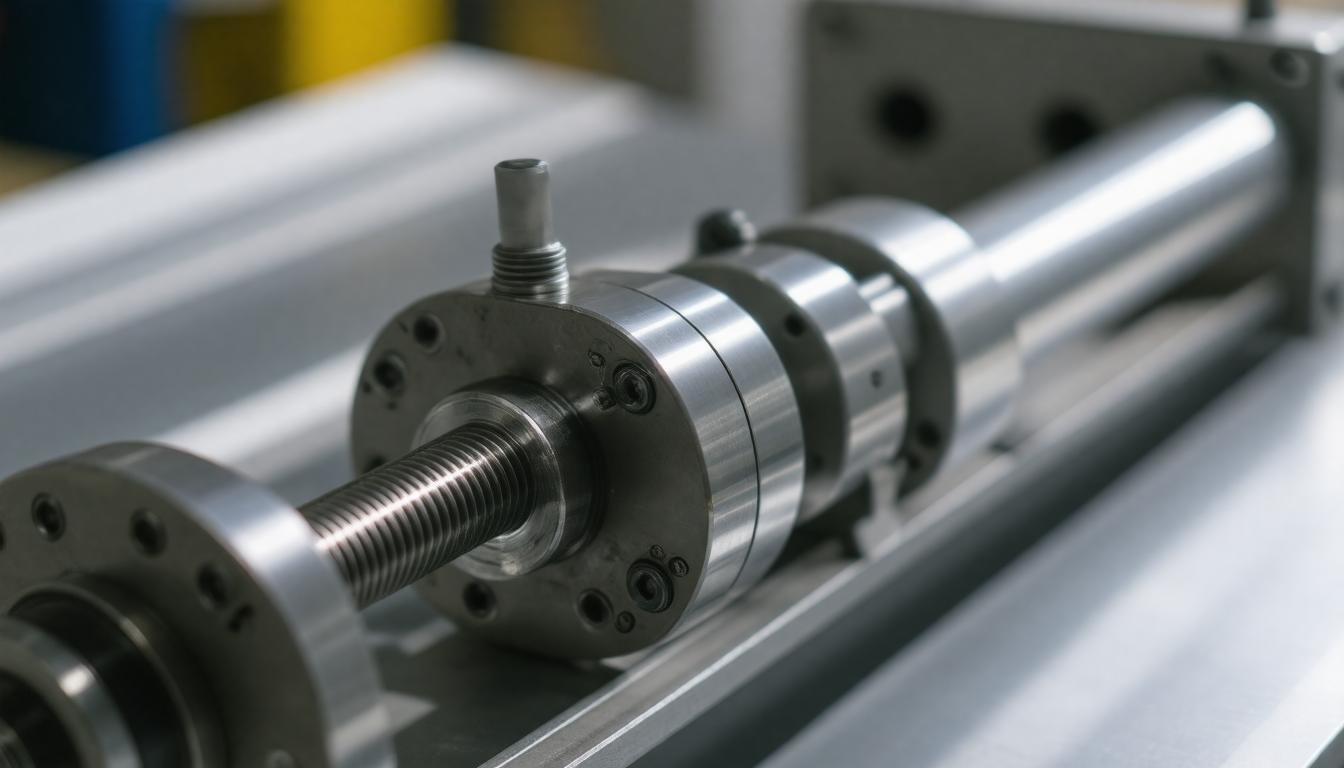
When machines need to move something in a straight line—whether it’s adjusting a robot’s arm or opening a valve—they rely on devices called spindle actuators. These gadgets might sound technical, but they work by turning circular motion into smooth, precise back-and-forth movement. This simple idea powers many complex machines across factories, hospitals, and even aircraft. In this guide, we’ll break down what spindle actuators are, how they work, and why they’re so important in industries that demand accuracy and reliability.
A spindle actuator is a type of linear actuator that converts rotary motion into precise linear movement using a motor-driven spindle, such as lead screws or ball screws. Widely used in industrial automation, these actuators provide consistent force and speed with excellent position control, making them ideal for tasks requiring accurate linear positioning and reliable performance.
At its core, a spindle actuator is a mechanical device designed to transform rotary movement—usually supplied by an electric motor—into smooth, controlled linear motion. It accomplishes this feat through the interplay of a spindle, typically a threaded shaft (such as a lead screw or ball screw), and a nut that rides along those threads as the spindle turns. This interaction allows for exceptionally precise positioning along a straight path, making spindle actuators indispensable in many industrial settings.
Imagine turning a screw into a piece of wood: as you rotate it, the screw gradually moves deeper and further into the material. A spindle actuator uses this same principle but with engineered components crafted to exacting standards. The motor steadily spins the spindle, which causes the nut attached to the load or tool to move either forward or backward in a highly controlled manner. This mechanical translation of rotation to linear travel provides both accuracy and repeatability, often measured in microns for tasks where minute adjustments matter.
The beauty of spindle actuators lies not only in their precision but also in their flexibility. Different types of spindles are employed depending on application demands—ball screws reduce friction for smoother movement and greater efficiency, while lead screws offer simplicity and self-locking capability without needing complex brakes. Furthermore, variations like trapezoidal or roller screws tailor performance characteristics such as load capacity and wear resistance.
Here’s how some common spindle types compare:
| Spindle Type | Efficiency | Load Capacity | Typical Use Cases |
|---|---|---|---|
| Lead Screw | Moderate (~40-60%) | Medium | Light to medium loads, self-locking |
| Ball Screw | High (~90%+) | High | High precision, heavy-duty industrial |
| Roller Screw | Very high (>90%) | Very high | Aerospace, demanding environments |
The actuator’s overall performance hinges on more than just the spindle design. Motor selection, gear ratios, and bearing quality all contribute to the smoothness, speed, and reliability of linear motion. In fact, one fascinating detail about modern electric spindle actuators is their ability to maintain consistent output power regardless of direction or load since their motor-driven mechanism avoids efficiency losses common in hydraulic or pneumatic alternatives.
This means you get steady control whether pushing or pulling, enabling engineers to select actuator configurations that optimise either high force at low speed or swift movement with lighter loads—all tailored precisely to their process requirements. For industries like manufacturing automation, robotics, aerospace assembly, and medical devices where accuracy can be mission critical, this predictability makes spindle actuators highly trusted components.
Additionally, stroke lengths—the total distance the actuator can extend or retract—vary widely from just millimetres in fine-tuned lab equipment up to metres in large industrial machinery. This versatility ensures spindle actuators remain relevant across diverse sectors.
When choosing a spindle actuator for your needs, focus first on calculating both the required force (the pushing or pulling load) and desired speed of movement. These two variables directly determine the necessary power output (force × speed), guiding you toward models with suitable motor sizes, spindle geometry, and nut designs. For heavier workloads, longer nut lengths help spread forces evenly across threads, extending service life—a small design choice with big impact.
Understanding these fundamentals equips us to navigate through various spindle actuator types and their specialised industrial applications with confidence.
At the heart of every spindle actuator lies a well-coordinated assembly of parts that work together seamlessly to convert rotational force into precise linear motion. The motor is the first key component. Whether electric, hydraulic, or pneumatic, this motor serves as the powerhouse. Electric motors, especially brushless DC or stepper types, dominate industrial settings because they offer excellent energy efficiency and fine control over speed and position. This precision control allows operators to maintain consistent motion across the actuator’s entire range — a crucial factor in automated processes where accuracy matters.
Moving from power to motion, the screw translates this rotary energy into linear travel. These screws are typically crafted from durable materials like stainless steel or bronze, chosen for corrosion resistance and strength. In demanding installations where friction and wear could compromise longevity, ball screws are often preferred. Their design incorporates recirculating ball bearings that drastically reduce friction between the screw and nut threads, boosting both efficiency and lifespan. This detail means less energy lost to heat and smoother operation, which in turn reduces maintenance needs.
The nut works hand in hand with the screw by riding along its threads during rotation. Importantly, nuts come in various lengths to distribute force more evenly across the threads—a longer nut can handle heavier loads by reducing thread stress and preventing premature wear. This aspect is subtle but vital; think of it like spreading weight evenly across a bridge rather than concentrating it in one spot. Selecting the right nut length is part of tailoring an actuator to fit specific load requirements accurately.
It’s also worth noting that changes in nut length and thread geometry affect not just durability but also efficiency. For example, spindle geometry, whether trapezoidal or high-profile designs, influences how smoothly the nut travels along the screw and how much force is converted directly into useful motion versus lost in friction. Manufacturers like LINAK carefully optimise these variables to strike a balance between strength, speed, and longevity tailored for different industrial tasks.
When considering spindle actuators for your project, pay close attention to how these three components fit together rather than viewing them independently. The motor’s torque curve should align with the screw’s pitch and lead to deliver the desired speed without overloading any element. Meanwhile, pairing an appropriately designed nut ensures you get not only movement precision but also reliability over countless cycles.
“Efficiency depends on harmony; unmatched parts won’t guarantee smooth performance—true success comes when motor, screw, and nut operate as a unified system.”
In practise, proper integration of these core components leads to actuators capable of delivering consistent braking force or fast stroke speeds regardless of direction—something hydraulic or pneumatic alternatives often struggle to achieve uniformly. Understanding this synergy explains why spindle actuators have become indispensable in sectors ranging from robotic assembly lines to fire safety mechanisms produced by companies such as Mercor UK.
Recognising how these components interplay provides a solid foundation for grasping how spindle actuators function on a mechanical level. Next, we explore the underlying principles that govern their operation and reveal what keeps these devices running with such precision day in and day out.
At the heart of every spindle actuator lies a deceptively simple concept: rotary motion turned into linear displacement. Imagine a motor spinning a threaded screw—this screw is the spindle. As it turns, a nut rides along its threads, moving in a straight line. This is the basic mechanism that translates the motor’s rotation into movement that pushes or pulls a load with precision.
What sets spindle actuators apart is their ability to provide this translation of energy with efficiency and repeatability. The motor—often brushless DC or AC servo—delivers controlled rotation at varying speeds and torques. The spindle’s thread design, whether trapezoidal, ball screw, or high-profile geometry, directly influences how smoothly and powerfully the nut moves along it.
For instance, a ball screw reduces friction because ball bearings roll between the threads, boosting efficiency to 85-95%, whereas trapezoidal screws offer greater robustness but slightly lower efficiency.
To picture this in everyday terms, think of opening a jar with a screw-top lid. Twisting the lid (rotary motion) lifts or lowers the lid one full turn. Similarly, turning the spindle causes the nut attached to your load to travel linearly—whether pushing a valve open or adjusting an industrial robot arm.
Another important aspect is load consistency. Unlike pneumatic or hydraulic actuators that can vary force output depending on direction due to pressure changes inside cylinders, spindle actuators maintain nearly constant force throughout both push and pull movements. This uniformity leads to more predictable behaviour when controlling position or speed.
The actuator’s control system plays a vital role too. Typically employing PID loops and position feedback from encoders or resolvers, modern spindle actuators deliver precise adjustments often within milliseconds. This makes them invaluable for applications demanding tight tolerances such as assembly lines, packaging machinery, or even fire safety dampers where accurate positioning can be critical.
Thermal considerations also affect working principles. During operation, heat generated from friction and motor resistance requires proper housing design with lubrication systems and materials capable of operating across -20°C to 80°C industrial ranges without degrading performance or shortening life expectancy.
Grasping how these elements work together reveals why spindle actuators are trusted tools across various sectors—combining simplicity in mechanical design with sophisticated control strategies to achieve reliable and precise linear motion.
Spindle actuators have a way of blending power with precision, making them favourites in many industrial sectors. Take manufacturing, for instance. In automotive plants, these actuators are the unsung heroes behind robotic arms that handle welding and assembly—tasks demanding both steady force and exact movements. Their ability to maintain consistent effort through every stroke ensures each weld is solid and every part fits perfectly, reducing errors on the production line and improving overall quality.
Moving from the factory floor to aerospace, the stakes get even higher. Here, spindle actuators power landing gear systems and control surfaces—components where reliability isn’t just a preference, it’s a necessity. These actuators can operate smoothly within challenging environments, sometimes enduring extreme temperatures or vibrations. Their precision allows aircraft components to respond swiftly and accurately, contributing to flight safety and performance.
The medical field also leans heavily on spindle actuators—though for slightly different reasons. Surgical robots, MRI machines, and hospital beds demand not just power but razor-sharp precision. Imagine a surgical robot making incisions or manipulating delicate tissues; every millimetre counts. Thanks to spindle actuators’ controlled linear movement combined with steady speed and force, they provide that essential fine control without sacrificing durability or consistency. Their presence here underscores their reputation for reliability in high-stakes settings where failure isn’t an option.
This span—from robust automotive assembly lines to delicate surgical instruments—highlights how spindle actuators’ design versatility meets various industry demands effectively.
| Industry | Key Application | Load Capacity | Precision | Operating Environment |
|---|---|---|---|---|
| Manufacturing | Robotic arms for welding & assembly | 500 N to 5000 N | ±0.01 mm | High repeatability on assembly lines |
| Aerospace | Landing gear, control surfaces | Up to 3000 N | ±0.01 mm | Extreme temperatures (-40°C to 85°C) |
| Medical Equipment | Surgical robots, MRI machines | Moderate (50-200 N) | ±0.005 mm | Cleanroom compatible, precise control |
| Packaging | Labelling & automated packing | 200 N to 1500 N | Standard industrial | Rapid cycling under repetitive tasks |
Understanding your application guides selection between actuator types, gears, or spindle designs. For example, ball screw spindles offer enhanced positioning accuracy favoured in aerospace and medical uses. Meanwhile, trapezoidal spindles may suffice for general manufacturing needs where durability and cost-efficiency matter most.
Companies like Mercor UK emphasise matching actuator performance tightly to industry requirements—not simply buying what’s available but choosing configurations that optimise output power relative to load and speed needs. This nuanced selection process reduces downtime, heightens efficiency, and assures long-term reliability in ever-demanding industrial settings.
With these insights into how spindle actuators excel across diverse industries, it becomes clearer why understanding their various types and functions can enhance your equipment choices dramatically.
Spindle actuators come in several forms, each defined by how they convert rotary motion into precise linear movement. The most common you’ll encounter are motor-driven, solenoid-based, and pneumatic spindle actuators. Each type has a distinct operational mechanism that makes it suitable for particular tasks and industrial environments.
Starting with motor-driven spindle actuators, these stand out for their ability to deliver accurate and consistent motion. By coupling an electric motor with lead screws or ball screws, these actuators transform rotational force into smooth linear travel. This design allows for exceptional control over speed and position, which is why they’re widely used in CNC machines, robotics, and precision assembly lines.
Their stroke lengths often range from as short as 10 mm up to a generous 500 mm or more, with the capability to generate forces from a couple hundred Newtons to thousands depending on scale.
A critical insight here involves selecting the appropriate screw type—ball screws reduce friction and increase efficiency but cost more, while trapezoidal lead screws offer durability at a lower price point.
Moving from motorised precision to rapid actuation brings us to solenoid-based spindle actuators.
Solenoid actuators operate quite differently—they rely on electromagnetic force to produce fast linear movements that are typically restricted to fully extended or retracted positions. While this limits their use where fine positional control is necessary, their quick response time makes them ideal for applications like valve controls or safety interlocks where “on/off” action matters more than nuanced positioning.
Their simplicity means fewer moving parts and reliability under harsh conditions, but manual override isn’t always straightforward.
If your application demands speed over precision and simplicity over complexity, solenoids might be the perfect solution.
Next in line are pneumatic spindle actuators, which harness compressed air to drive the spindle forward and backward.
Pneumatic spindle actuators are prized for combining high speed with considerable power output. Using air pressure provides a lightweight yet strong mechanism capable of stroke lengths typically between 20 mm and 300 mm with forces ranging from hundreds to several thousand Newtons.
However, one trade-off lies in control precision—a pneumatic actuator excels at quick push-pull movements but struggles with maintaining exact positions because air compressibility introduces variability.
These actuators find homes in packaging equipment, automation systems, and light assembly operations where rapid cycling is crucial but micrometre accuracy is less so.
Choosing among these types boils down to the particular requirements of your task: do you need precise control, rapid binary movement, or fast powerful strokes? Knowing these distinctions helps ensure you don’t overspend on unnecessary features or underspec your system’s performance.
| Type | Mechanism | Stroke Length (mm) | Force Output (N) | Speed Range (mm/s) | Position Control | Common Applications |
|---|---|---|---|---|---|---|
| Motor-driven Spindle | Electric motor + screw | 10–500 | 100–10,000 | 1–500 | High precision ±0.01 mm | CNC machines, robotics |
| Solenoid-based Spindle | Electromagnetic pull/push | Limited | Moderate | Very fast (<100) | Binary (open/closed only) | Valves, safety interlocks |
| Pneumatic Spindle | Compressed air | 20–300 | 200–5,000 | 50–1,000 | Limited precision ±0.1 mm | Packaging, automation |
When selecting a spindle actuator for industrial applications—whether you’re retrofitting equipment or designing new systems—it’s crucial to evaluate both mechanical requirements like load and speed as well as environmental factors such as space constraints and reliability needs. This approach avoids common pitfalls like undersizing your actuator for the load or choosing a fast but imprecise type when accuracy is paramount.
In practise, pairing your selection with custom options—such as different gear ratios or spindle nut designs—can further optimise performance and longevity. This ensures that your actuator precisely meets operational demands without compromise. Understanding these nuances sets the stage to weigh the advantages and limitations each actuator type presents when applied in real-world situations.
When you first encounter spindle actuators, their precision stands out immediately. For industries like semiconductor manufacturing or precision assembly, where moving parts to within a fraction of a millimetre matters tremendously, the reliable positioning provided by electric spindle actuators is invaluable. This exactness comes from components like finely crafted lead screws and encoders that continuously monitor position, allowing for adjustments in real-time. The result is a movement so controlled it borders on surgical.
Beyond precision, energy efficiency is another key advantage. Electric spindle actuators typically boast efficiency rates up to 90%, as energy is converted almost entirely into useful motion rather than wasted heat or noise. This contrasts notably with hydraulic and pneumatic counterparts that lose power through fluid friction or compressed air leaks. Operational costs drop when the actuator’s power demand aligns tightly with output needs—a significant consideration for factories running machines around the clock.
Maintenance demands also set spindle actuators apart. Because ball screw varieties have significantly less internal friction than older designs, they tend to wear slower and require less frequent lubrication or part replacement. In practical terms, this translates into fewer unplanned downtimes and lower servicing budgets, an attractive prospect for engineers who must keep complex machinery online without interruption.
However, these benefits accompany certain drawbacks that shouldn’t be overlooked when planning your project.
The initial cost of spindle actuators can be daunting. Advanced models equipped with high-precision sensors, robust motors, and smart control systems often come with price tags ranging from several thousand dollars upwards. For smaller operations or hobbyists, this investment might not justify the benefits if the application doesn’t demand ultra-fine control.
Furthermore, complexity creeps in—not just in buying but also installing and maintaining these devices. Proper selection depends on matching stroke length, load capacity, and speed to the application’s requirements; missteps here can lead to inefficient setups or premature failures. Installation often involves integrating with electronic controllers and ensuring alignment within tight mechanical tolerances, tasks that call for technical skill and experience.
Speed limitations present another consideration. While electric spindle actuators provide steady and controlled movement, their maximum velocities generally fall below those achievable with pneumatic actuators. For processes demanding rapid cycling or extremely fast actuation—think packaging lines or stamping presses—spindle actuators may lag behind unless carefully engineered for speed at the expense of force or precision.
| Aspect | Pros | Cons |
|---|---|---|
| Precision | High positional accuracy (±0.01 mm) | Requires high-quality components increasing cost |
| Energy Efficiency | Up to 90% efficient operation | Sensitive to electrical noise |
| Maintenance | Lower wear in ball screw designs | Technical knowledge needed for upkeep |
| Initial Cost | Long-term ROI through reliability | Higher upfront investment |
| Speed | Smooth speed control throughout stroke | Slower max speeds compared to pneumatic options |
| Complexity | Good integration with smart controllers | Complex installation and calibration |
To choose the right spindle actuator, focus on your project’s priorities: pinpoint accuracy, energy efficiency for continuous operation, or high-speed repetitive movements. Consulting experienced manufacturers like Mercor UK, known for custom fire safety solutions, can ensure you find an actuator that suits your industrial needs precisely.
With a clear understanding of how different spindle actuators align with industrial requirements, it’s time to look ahead at emerging developments reshaping actuator technology and what the future holds.
The world of spindle actuators is entering a transformative phase powered by innovations that seamlessly blend mechanical precision with digital intelligence. One of the most striking trends gripping the industry is IoT integration. By embedding sensors and communication modules, actuators become connected devices capable of providing real-time data on performance metrics such as speed, temperature, vibration, and operational anomalies.
Imagine a scenario where a maintenance team remotely monitors spindle actuator health through a dashboard — this not only allows them to anticipate failures before they happen but also optimises scheduling for repairs. The result? Dramatic reductions in downtime and operational costs, enhancing overall productivity.
Alongside connectivity, advancements in material science are redefining actuator resilience and efficiency. Manufacturers now leverage advanced composites and alloys that offer superior wear resistance, lighter weight, and improved thermal handling capabilities. This means actuators can operate at higher speeds or endure more demanding environmental conditions without premature failure.
For industries like aerospace or automotive manufacturing, where precision and reliability are non-negotiable, these material improvements translate into longer service life and reduced maintenance efforts.
“Materials are the silent heroes behind next-generation spindle systems; without them, even the smartest software can’t perform well,” notes a leading engineer specialising in industrial automation.
As materials evolve to meet harsher demands, the challenge shifts towards intelligently managing actuator operations—enter AI optimisation.
Artificial Intelligence is proving to be a game changer by enabling predictive maintenance and operational fine-tuning in real time. Using machine learning algorithms trained on large datasets collected from connected spindles, AI applications can identify patterns signalling wear or impending malfunction far earlier than traditional methods.
This predictive insight not only improves safety—a vital consideration especially for sectors such as fire safety solutions provided by companies like Mercor UK—but also extends equipment longevity by avoiding abrupt breakdowns. Furthermore, AI-driven control modules adapt actuator responses during operation, optimising torque and speed to match workload requirements dynamically rather than relying on fixed preset parameters.
The cumulative effect of these technological drivers includes:
| Trend | Impact |
|---|---|
| IoT Integration | Enables proactive monitoring and remote troubleshooting |
| Advanced Materials | Enhances durability and permits operation under extreme conditions |
| AI Optimisation | Facilitates predictive maintenance and optimises performance |
These trends converge especially well within highly regulated fields like fire safety solutions offered by Mercor UK, where equipment reliability can mean the difference between disaster and effective prevention.
Embracing smart spindle actuator technologies aligns perfectly with Industry 4.0 principles that emphasise interconnected machinery working collaboratively within digital ecosystems. This creates opportunities for manufacturers to deploy intelligent fire safety mechanisms that react swiftly under emergency conditions, backed by data-driven insights ensuring consistent performance.
In summary, staying ahead requires continuous investment in research and partnerships that bring together digital innovation with practical engineering expertise. For anyone involved in industrial automation or fire safety technology procurement, keeping an eye on these evolving spindle actuator capabilities will be essential for making informed decisions that build safer, more efficient operations for years to come.
To unlock the full potential of these advances in spindle actuators, partnering with trusted industry leaders like Mercor UK is key. Request a quote today at https://mercor-uk.co.uk/request-a-quote/ to explore tailored solutions that meet your operational needs while driving innovation forward.
Smoke ventilation systems might not be the first thing you think about when walking into a building, but they play

When it comes to keeping your home safe from fire, smoke can often be the biggest danger—more than heat or
UK mainland delivery
Stock on hand in our UK warehouse
Online and phone support
Safe online payment options